RS Footy Build Guide
v1.8
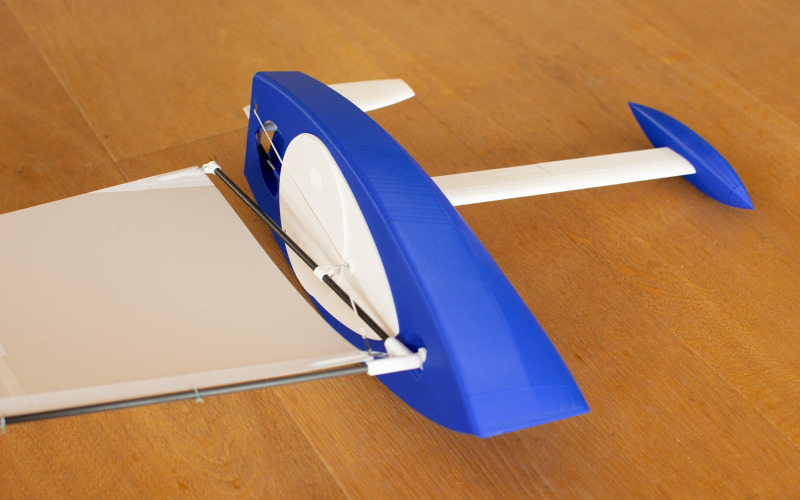
These are the instructions for building the Racing Sparrow Footy 305 3D printable rc yacht. The RS Footy is really easy to build and a gentle intro to RC sailing for the hobbyist or classroom.
Contents
- 1. Overview
- 2. Preparation
- 2.1. Tools Required
- 3. 3D Printing
- 3.1. Colour Batches / Filament Choice
- 3.2. Print the Parts
- 4. Hull Build
- 4.1. Hull Preparation
- 4.2. Hull Assembly
- 4.3. Sheet Exit Tube
- 5. Electrics
- 5.1. Servo Tray & Binding Receiver
- 5.2. Battery Box
- 5.3. Servo Tray Installation
- 6. Rudder & Sail Arm Installation
- 6.1. Sail Arm Installation
- 6.2. Rudder Push Rod
- 6.3. Rudder Pin
- 6.4. Centering & Trim
- 6.5. Main Sheet Routing
- 7. Hatch
- 7.1. Drill Anchor Point Hole
- 7.2. MainSheet Anchor Pin
- 7.3. Seal Anchor Point
- 7.4. Hatch Plate Fixing
- 8. Keel Build
- 8.1. Keel Halves Assembly
- 8.2. Join Bulb to Keel
- 8.3. Bulb Filling
- 8.4. Final Keel Steps
- 9. Mast & Boom
- 9.1. Cut Mast & Boom Sections
- 9.2. Mast Disk Installation
- 9.3. Gooseneck Joiner & Boom
- 9.4. Attachment Points
- 10. Sail Making
- 10.1. Workspace Setup
- 10.2. Sail Shape Cuts
- 10.3. Sail Corners & Battens
- 10.4. Leading Edge Tape
- 10.5. Lacing Sail to Mast
- 10.6. Mainsheet Loop
- 11. Main Sheet & Radio Setup
- 11.1. Boom Angle & Trim
- 11.2. Radio Fine Tuning
- 12. Ready to Sail
- Printing Guide
1. Overview
The RS-Footy-305-3D is a 3D printed radio controlled yacht. By design it's the easiest boat build we offer at Racing Sparrow. This build is suitable for ages 7 and up.
For 3D printing advice and tips read our in-depth blog post.
2. Preparation
2.1. Tools Required
These are the tools you will need to complete the build. None of these tools are mandatory, you may be able to do the job with what you have. This list makes the job easy.
- Craftknife
- Hacksaw or Dremel
- Drill
- Small plyers
- Scissors
- Hammer, a small one is great
- Small round hobby file
- Needle
- Metal Ruler
- Sandpaper
- Marker Pen
3. 3D Printing
For this project the minimum printer bed size required is 200 x 200 x 200mm (xyz). This is within the capability of most small to mid size hobby 3D printers.
3.1. Colour Batches / Filament Choice
Print part colours in batches, like blue hull, white keel and rudder fins.
It really helps before you start to figure out the colour combos to save you extruding and retracting more than you need to.
At RacingSparrow we use mostly PLA+ to print all the parts but have also used standard PLA, clear PLAs, silk PLAs. All of these materials are great to use. We do find that PLA+ can withstand more punishment and is a little more heat resistant than other PLA's.
3.2. Print the Parts
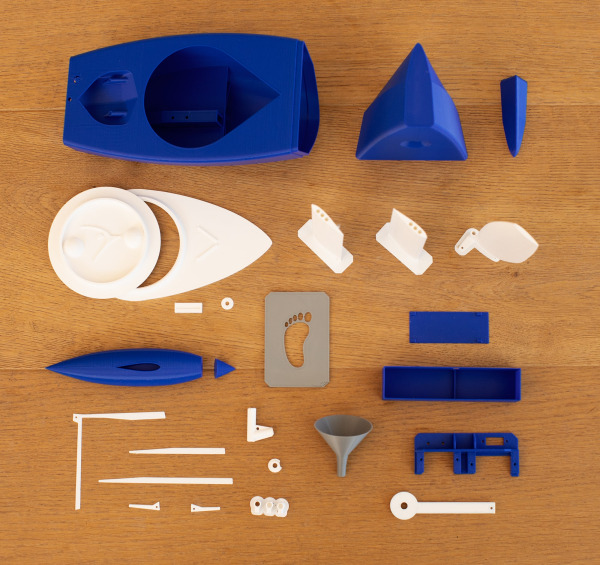
3d print all the parts. Use the checklist tab to see print settings for each part and keep track of progress.
4. Hull Build
4.1. Hull Preparation
-
A-RS-Footy-Stern.stl
-
B-RS-Footy-Bow.stl
-
C-RS-Footy-Nose.stl
-
Masking Tape
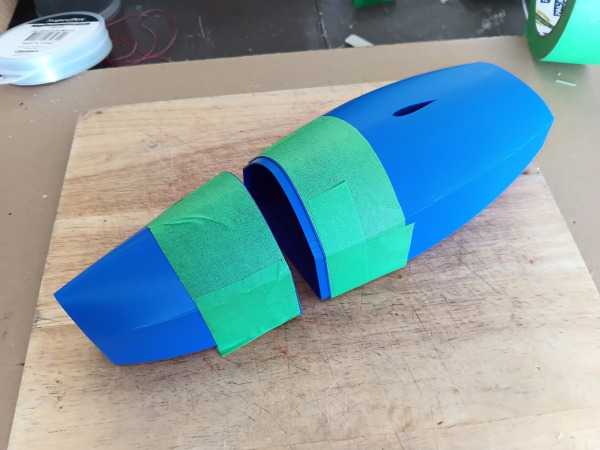
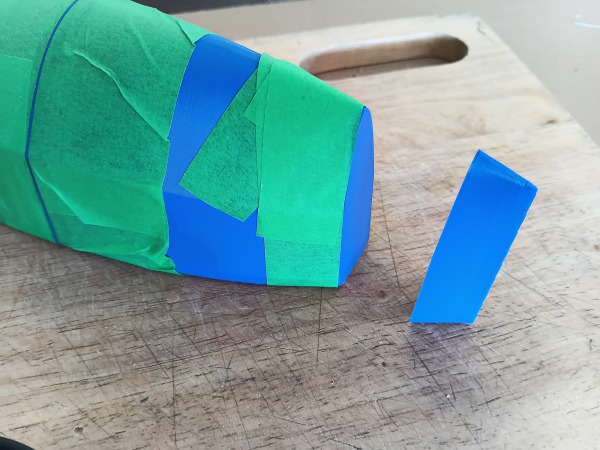
Clean up the printed parts carefully, mainly around the joins with sandpaper, craft knife, and file.
Masking Tape the hull joins on both sides of the joins so when you glue them together you don't get glue over-run at the joins.
4.2. Hull Assembly
-
A-RS-Footy-Stern.stl
-
B-RS-Footy-Bow.stl
-
C-RS-Footy-Nose.stl
-
(CA Glue) Superglue 20g
Super glue the hull together starting from the back of the boat and work forwards. Use plenty of glue to ensure the joins are water tight.
Now that the boat is now one piece and while the tape is still on the hull, run a bead of superglue along each join, then quickly wipe away the excess with a clean rag. This will seep into the gap and weld the joins together.
Remove the tape straight away before the glue sets completely.
4.3. Sheet Exit Tube
-
A-RS-Footy-Stern.stl
-
(CA Glue) Superglue 20g
-
Brass Tube 1/8
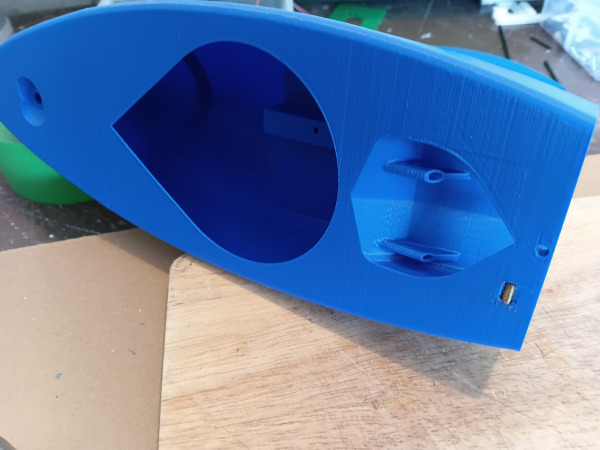
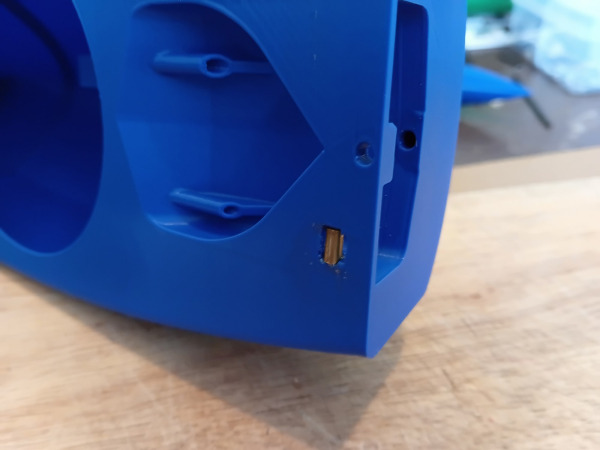
First break off the print in place support triangle covering the hole and clean up the edges with a craftknife and/or file. Mark the brass tube length against the exit hole with a marker pen.
Cut slightly oversize with a Dremel or Hacksaw then file the ends until there is a snug press fit. Glue with small drops of superglue in each seat in the PLA+.
5. Electrics
5.1. Servo Tray & Binding Receiver
-
J-RS-Footy-Servo-Tray.stl
-
On/Off Switch
-
Sail Servo - Emax 3054
-
Rudder Servo
-
Receiver
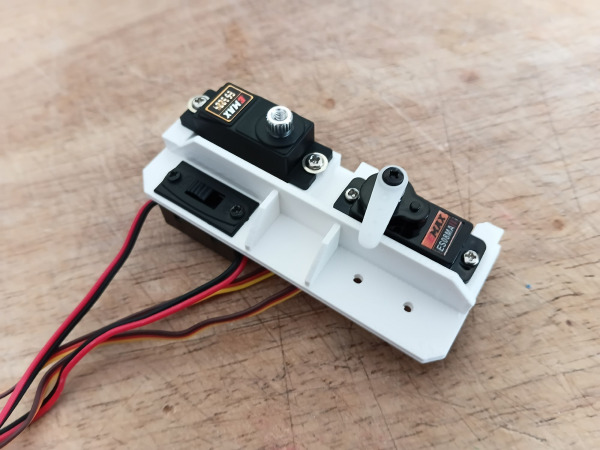
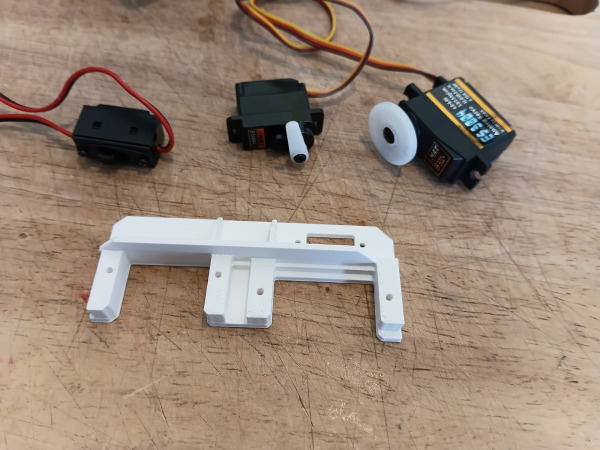
Screw in place the on/off switch.
Screw servos onto the servo tray. Use just the screws the servos come with and no rubber feet or ferrules needed.
While the servos and wires are outside the boat is the best time to bind the transmitter to the receiver and program the input channels. This will be quite specific to the brand of gear you have.
To put the receiver in bind mode press the small button on the receiver and at the same time switch the on button and give the receiver power. A red light will then flash.
Search youtube and google for relevant information on how to bind and program your transmitter. I find on my RadioMaster Pocket that channel 1 is rudder and channel 3 is the sail arm by default. I plug the battery switch into channel 5 or 6.
The battery compartment fits a light weight 4xAAA pack.
Note: there is a STEP file for the servo tray so you can adjust the 3d model to your specs if the servos you have are a different size. You can open a STEP file in a program like Fusion360 to re-create a new STL file.
5.2. Battery Box
-
H-RS-Footy-Battery-Box.stl
-
I-RS-Footy-Battery-Box-Lid.stl
-
(CA Glue) Superglue 20g
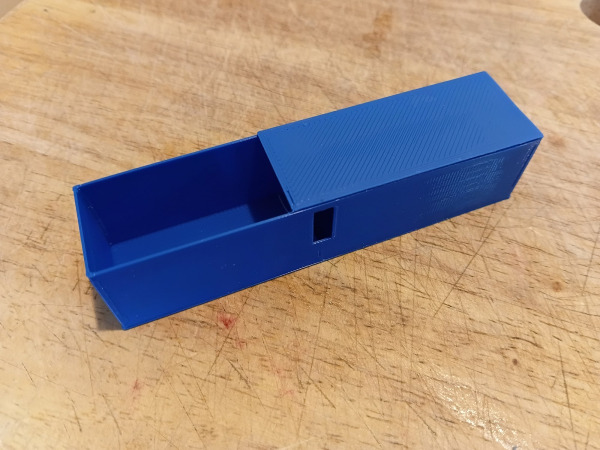
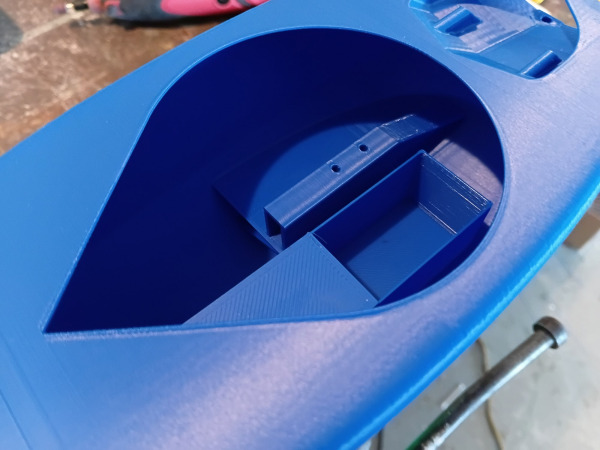
Glue the battery box lid to the battery box, then glue the battery box into the hull seat. It is designed to keep the weight centralised about the keel.
5.3. Servo Tray Installation
-
Screws 3mm
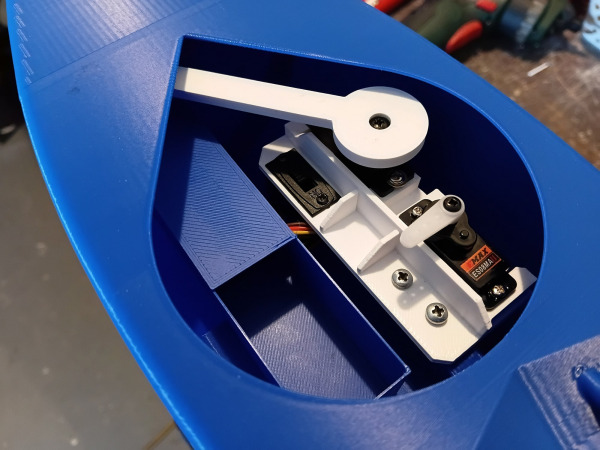
Install the servo tray and route the wires into the battery box. Screw the servo tray into the hull with the two 3mm screws.
6. Rudder & Sail Arm Installation
6.1. Sail Arm Installation
-
K-RS-Footy-Sail-Arm.stl
-
(CA Glue) Superglue 20g
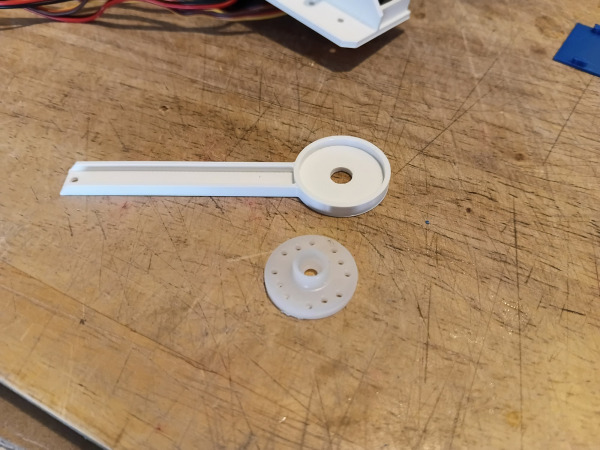
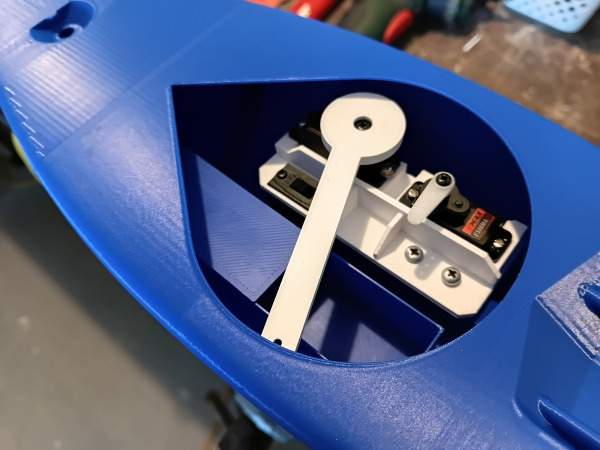
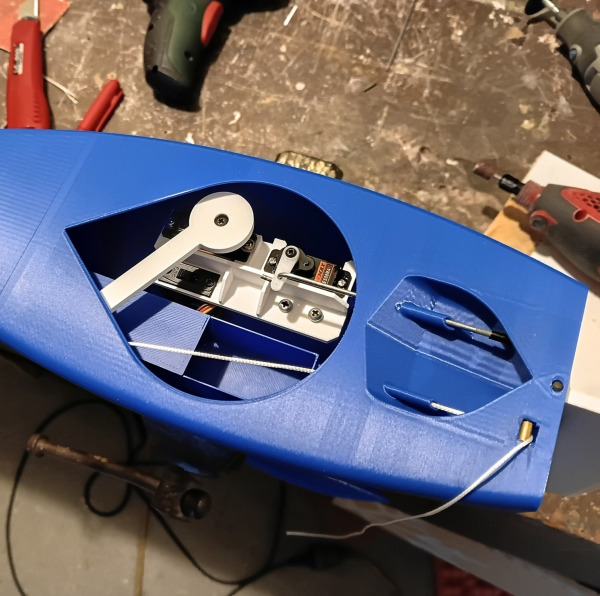
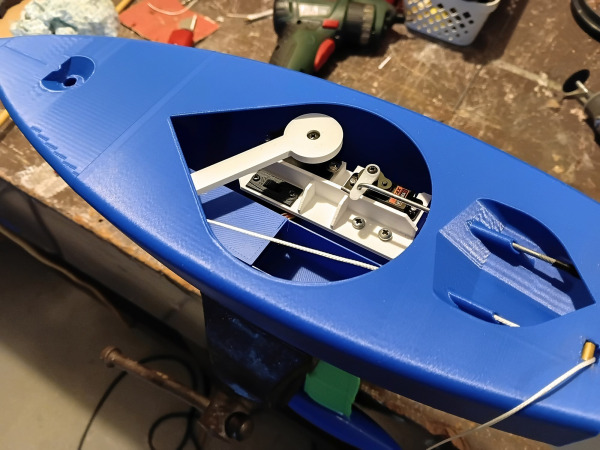
For the sail arm glue a round servo horn to the underside of the printed sail arm using superglue. It welds the two together and is very strong. Make sure to glue it centred. The top side needs to be accessible for the servo screw.
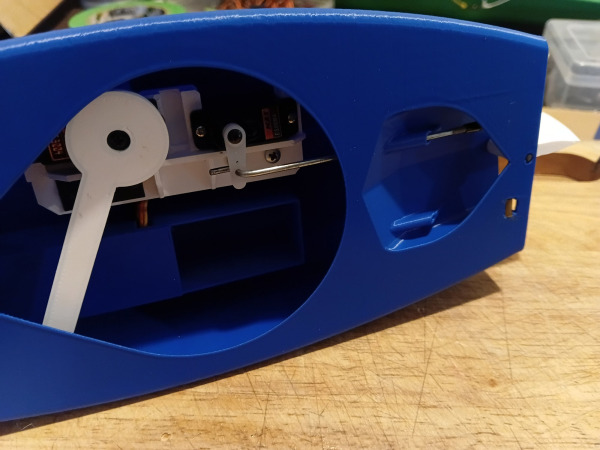
The servo should throw the arm 90 degrees giving the perfect amount of travel for the boom. When the arm is in the sail out position it should just be clear of the rudder servo mechanism by 3 or 4mm.
6.2. Rudder Push Rod
-
Control rod & clevis
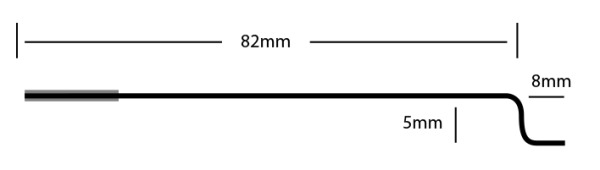
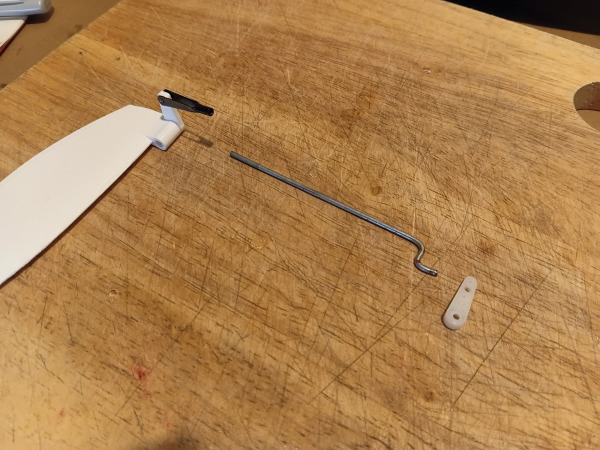
Note the measurements needed for the push rod. Bend this into shape with a pair of pliers.
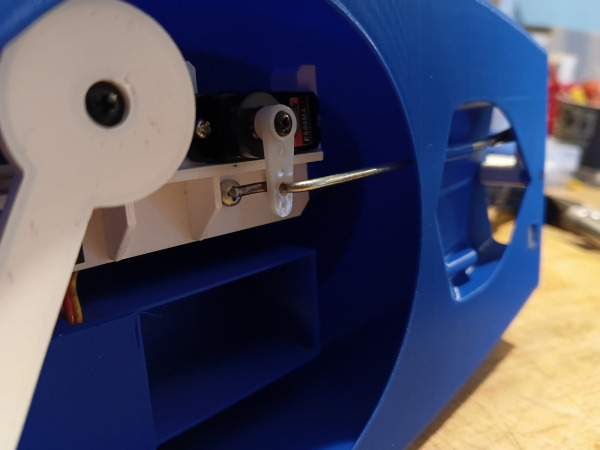
The threaded part will end up attached to the rudder control arm outside the boat. For the servo arm bend a z bend attachment point.
6.3. Rudder Pin
-
G-RS-Footy-Rudder-Curved.stl
-
Carbon Rod Round 3mm
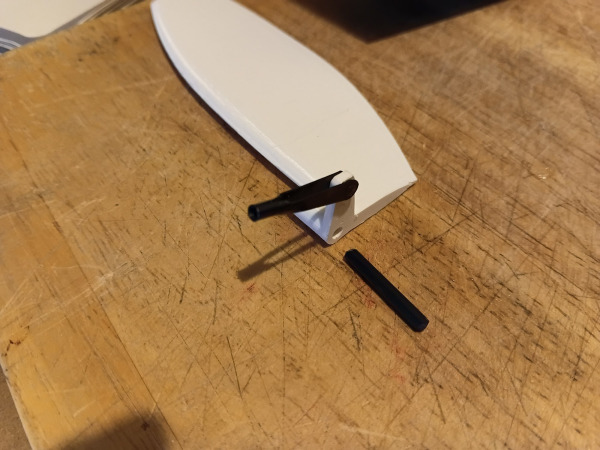
Cut a 3mm length of carbon rod to 50mm(check this).
Now test fit this in the rudder gudgeon holes and the rudder itself. You may find you need to gently drill out the hole or file with a small round file to get a snug fit for the boat parts and a loose or movable fit for the rudder.
Once happy tap the rod into place with a small hammer. You may find a snug fit is all that is needed or you may want a small drop of super glue to keep it in place. I find a no glue approach is good for maintenance or re-use of a rudder on another boat.
6.4. Centering & Trim
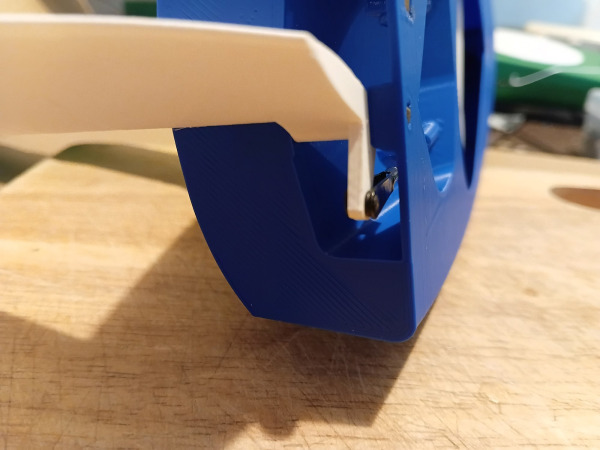
Now thread the push rod through the hull exit hole and thread onto the clevis attached to the rudder.
Ideally you want the rudder as centred as possible with neutral trim on the transmitter. Turn the clevis on the thread to get the best push rod length then screw the servo arm to the servo with push rod all attached.
Now fine tune the centering with transmitter trim controls.
6.5. Main Sheet Routing
-
(CA Glue) Superglue 20g
-
Braid Line
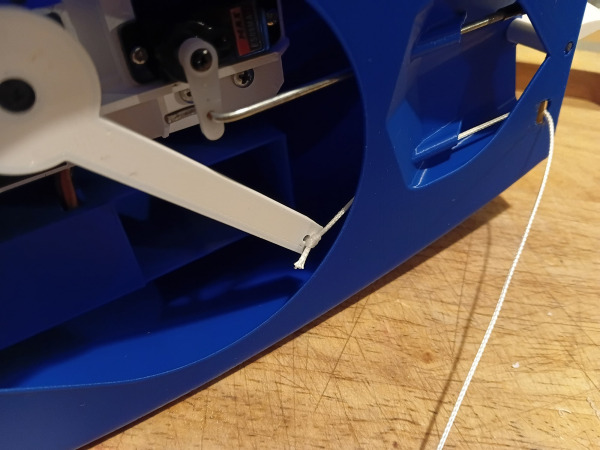
Tie a braid line to the sail arm. You can do this outside the boat then pop the arm back on the servo.
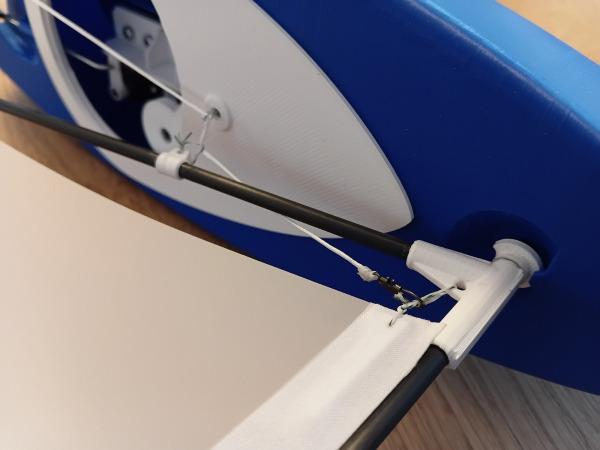
Run the line from the sail arm out the back of the boat then around the copper tube, through the anchor eyelet, through the main loop and the fishing clip then clips onto the front attachment braid line of the sail.
Glue all the knots with super glue.
7. Hatch
7.1. Drill Anchor Point Hole
-
L-RS-Footy-Hatch-Plate.stl
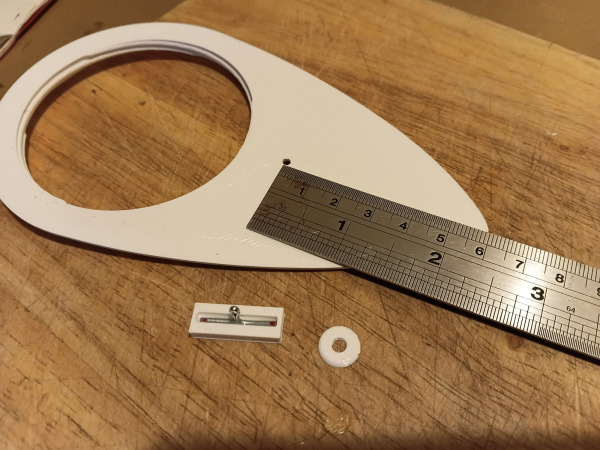
Drill a 3mm hole in the hatch plate 60mm from the front of the plate. This is where the split pin exits the hatch plate from the inside.
7.2. MainSheet Anchor Pin
-
N-RS-Footy-Pin-Anchor.stl
-
Masking Tape
-
(CA Glue) Superglue 20g
-
Split Pin
Build one sheet anchor by bending a split pin with pliers to form a T-shape. Super glue the t shaped pin into the anchor block. You may need to clip the ends of the split pin to make it fit in the slot.
Tape around the holes on the top side of the hatch to stop finger marks then glue the anchor from inside the hatch with superglue. Make the loop front-facing.
7.3. Seal Anchor Point
-
L-RS-Footy-Hatch-Plate.stl
-
N2-RS-Footy-Stay-Washer.stl
-
Epoxy Resin
Mix a small amount of epoxy or araldyte and seal the mainsheet anchor so no water can enter the hull.
To tidy up the glue and anchor slip a printed washer over the top and push down.
7.4. Hatch Plate Fixing
-
(CA Glue) Superglue 20g
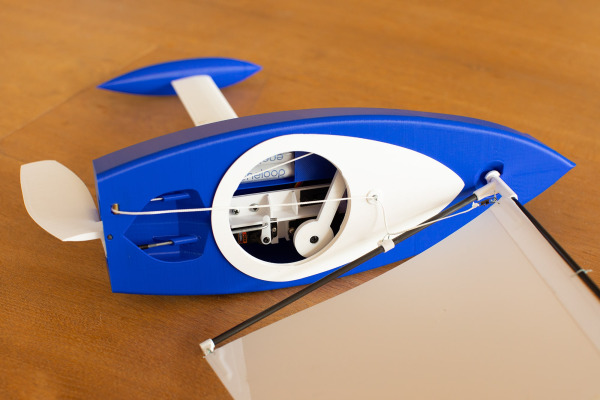
Test fit the hatch plate and ensure nothing is rubbing when the arm turns. Measure twice, glue once!
When happy apply plenty of super glue to the underside of the plate and glue it to the deck whilst applying moderate pressure for 20 seconds.
Make sure to line up the lugs and get the hatch sitting on the centreline of the boat.
8. Keel Build
8.1. Keel Halves Assembly
-
D-RS-Footy-Keel-Half.stl
-
Masking Tape
-
Epoxy Resin
-
Carbon Rod Round 3mm
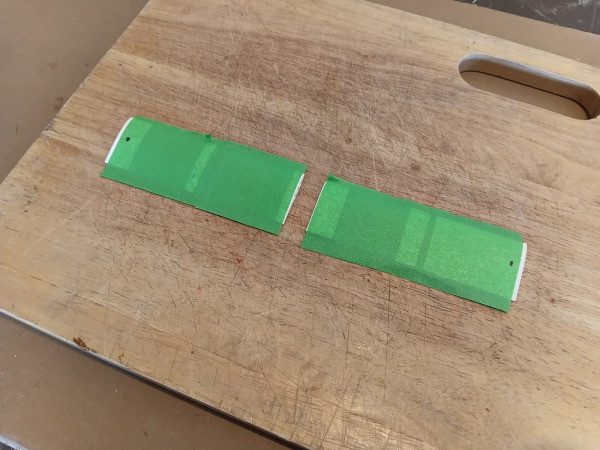
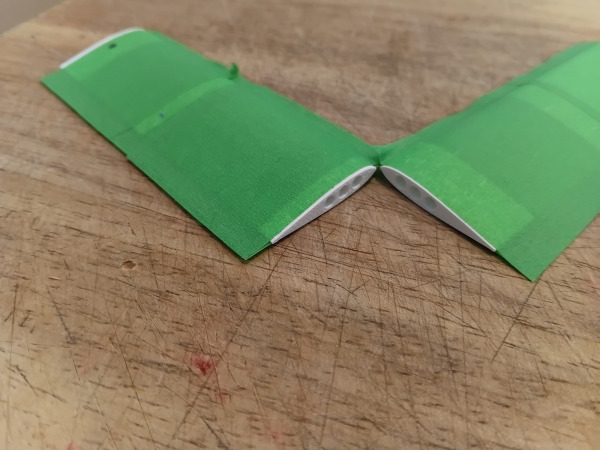
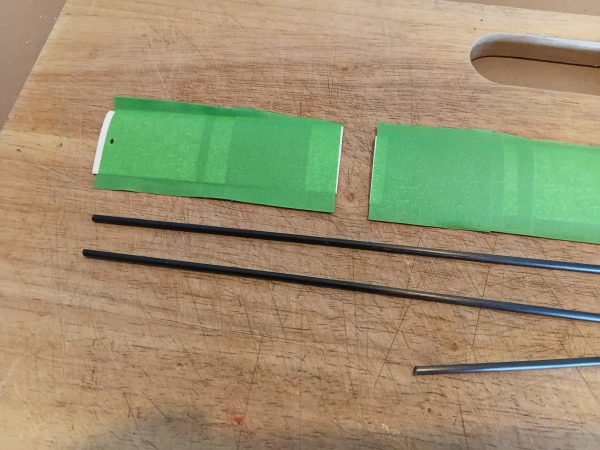
Using masking tape cover the keel completely with tape to stop glues and hand marks while you build. Make sure you leave the end clear of tape so it can glue into the bulb slot.
Cut 3 lengths of 3mm Carbon rod to 220mm(check this) in length. Clean up the ends up with sandpaper. Epoxy glue the keel together with the 3 rod internals and let the keel sit and set as per the epoxy instructions. Usually until it's set enough that you can handle without gloves.
8.2. Join Bulb to Keel
-
E-RS-Footy-Bulb-Main.stl
-
(CA Glue) Superglue 20g
Prepare the keel to fit neatly into the bulb trench and also prep the other end to fit into the hull. It's much simpler to do both ends before the bulb is attached. When both ends fit correctly then super glue in place the bulb to the bottom of the keel.
8.3. Bulb Filling
-
Epoxy Resin
-
Lead Shot, 200g
-
Methylated Spirits
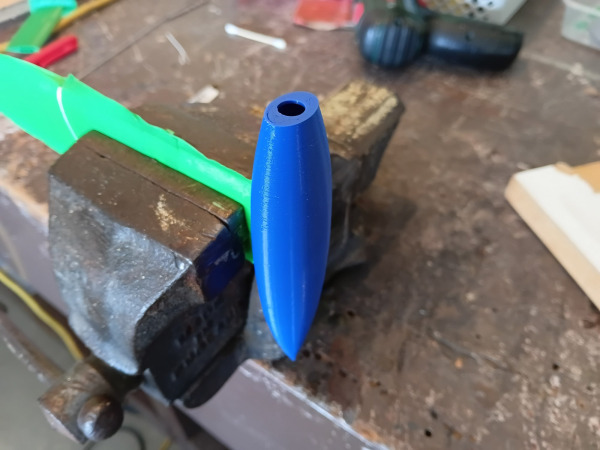
Place keel in a vice so the bulb is upright and the pour hole is at the top.
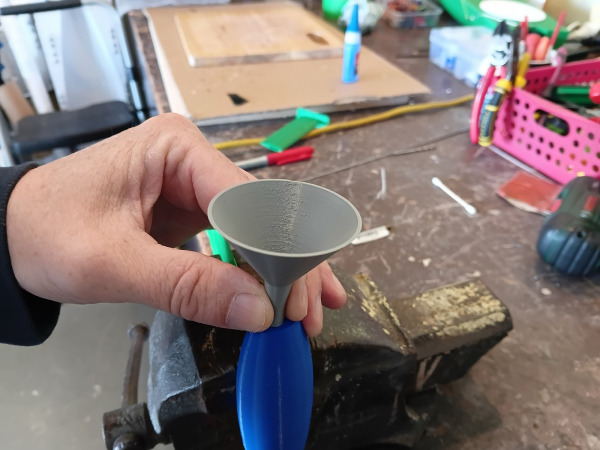
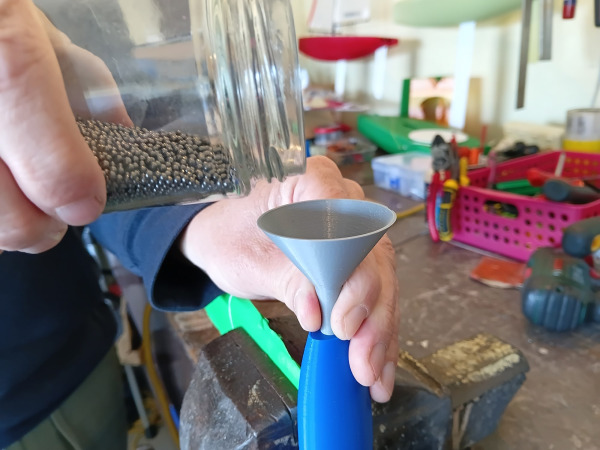
Fill bulb with lead shot leaving 1cm gap to leave gap for the glue pouring. Use the printed funnel to assist in the pouring of the both the lead and the resin. Note that the bulb actually has only 200g of lead shot inside. The rest of the weight is made up by the carbon rod, the PLA+ shell and the resin filling.
Prep the area for resin drips, cardboard underneath and a rag to mop up an drips or excess resin. A change of gloves part way through can be a good idea.
Mix 50ml resin thoroughly, then add 15ml mineral turpentine and mix again. Now slowly pour resin in via the funnel allowing it to soak through lead shot. It's a slow process that requires some patience.
Tap bulb with a hammer to release air bubbles. Top up with lead and resin so that it goes all the way to top.
Leave this to sit for around 12 hours or until completely set.
8.4. Final Keel Steps
-
F-RS-Footy-Bulb-Nose.stl
-
(CA Glue) Superglue 20g
Once the bulb has set super glue the bulb nose to the main bulb. Ideally you want no air inside the bulb. You may want to fill any voids with extra resin or filler.
You should now have a complete keel and bulb.
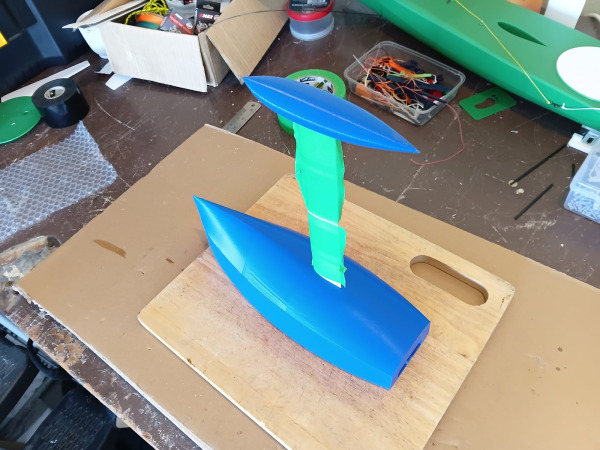
Now epoxy or superglue the keel into the hull. It should be perpendicular to the deck. Exactly 90°.
Now set the boat aside sitting upside down and let the keel set in place.
9. Mast & Boom
9.1. Cut Mast & Boom Sections
-
Carbon Tube 4mm
Cut the 4mm mast and 4mm boom to the plan dimensions found in the sail plans tab.
We recommend the B-rig as an excellent all-rounder for the widest range of wind conditions. If you sail in more wind than 15 knots then a second C-rig build is a great idea.
The footy being so small and sensitive generally requires multiple rigs to sail well in the full range of conditions. For very light winds the A rig provides great power.
9.2. Mast Disk Installation
-
P-RS-Footy-Mast-Disk.stl
-
(CA Glue) Superglue 20g
Slide the joiner up the mast and out of the way in preparation for the next part.
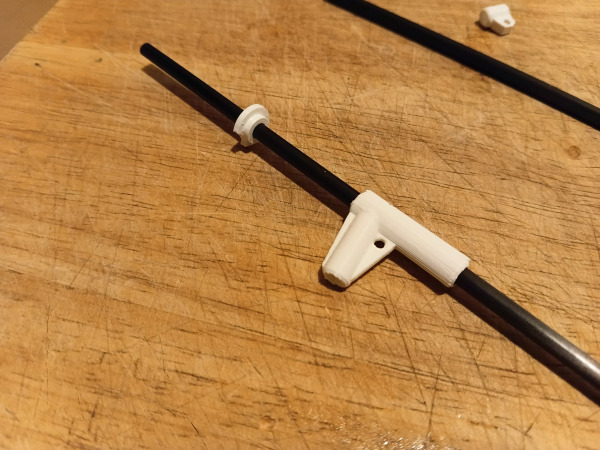
Insert the mast into hull, position the disk so the mast spins freely but cannot lift out. Once happy with the disk placement gently remove the mast from the hull and glue the disk by running superglue around the top and bottom. The glue will seep into the gaps and bond it.
Wipe away any excess glue and let the glue dry.
9.3. Gooseneck Joiner & Boom
-
O-RS-Footy-Goose-Neck.stl
-
(CA Glue) Superglue 20g
Add plenty of glue to where the joiner will sit and quickly slide the joiner in place before the superglue takes hold. You only get one chance so practice first and prep well. Measure twice, glue once!
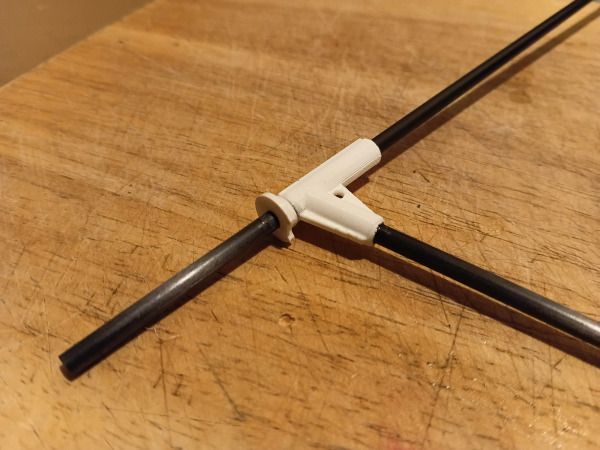
Now glue the joiner against the disk with the disc notch facing backward as in the image below.
Lightly sand the boom end and glue the carbon boom into the joiner.
9.4. Attachment Points
-
Q-RS-Footy-Rig-Attachments.stl
-
(CA Glue) Superglue 20g
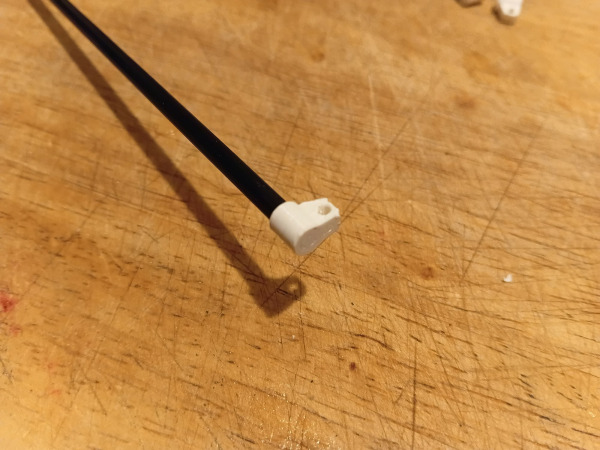
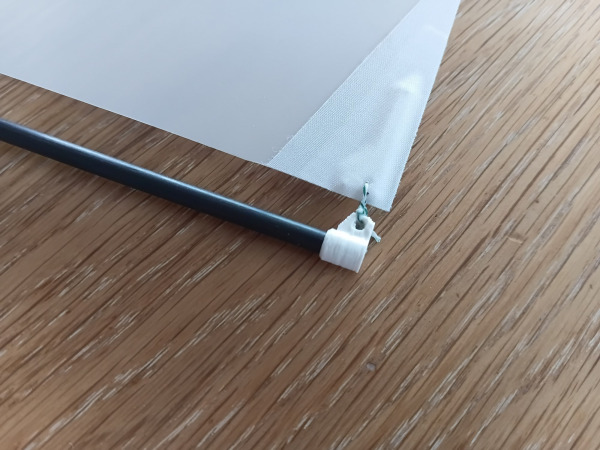
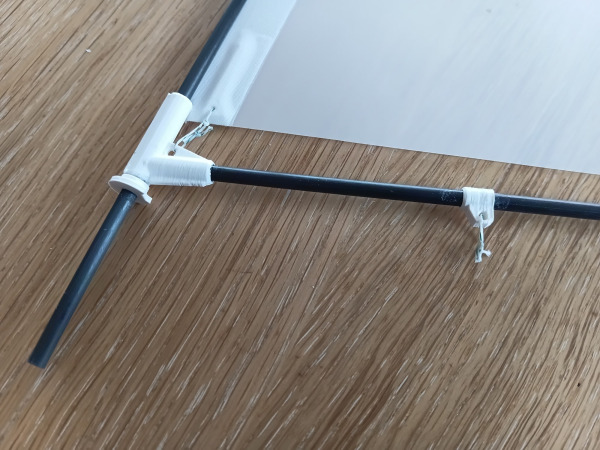
Position and glue the boom attachment points as per the sail plans. One for the end of the boom and the other for mainsheet loop.
Glue attachment part to the top of the mast making sure it is aligned with the boom.
10. Sail Making
10.1. Workspace Setup
Use a flat, cuttable surface such as scrap vinyl, plywood or cardboard.
10.2. Sail Shape Cuts
-
Sail Material
The sail is ideally made from one piece of material. No seams are needed unless your material you are using comes in smaller pieces like A4 architectural drafting film. You can use many things for sail material. Drafting film, reflective grow mylar, ripstop nylon, spinnaker sail offcuts, floral mylar. If you need to; first join panels of material to form one large rectangle as per the sail plans.
Cut the sail rectangle from your one piece material using the plan dimensions.
Measure, mark then cut the mast and boom offsets according to the sail plans.
Measure, mark then cut the square top measurement down to the bottom corner to complete the final outer shape of the sail.
10.3. Sail Corners & Battens
-
R-RS-Footy-Sail-Battens.stl
-
Spinnaker Repair Tape
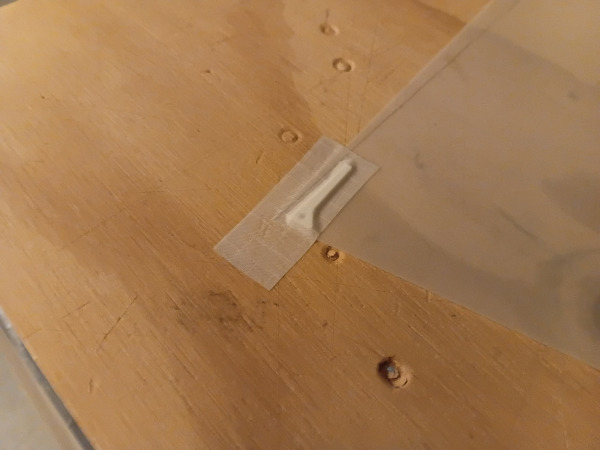
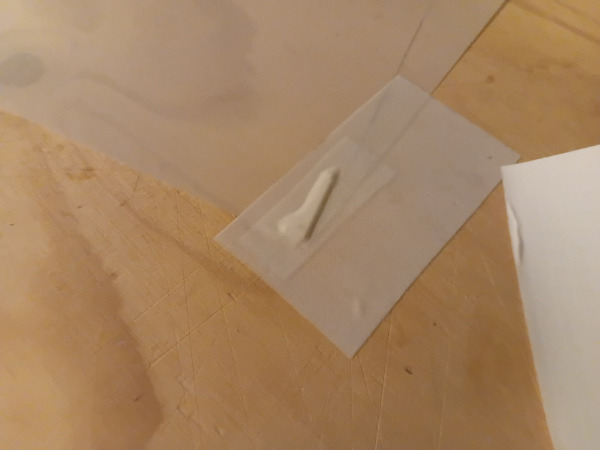
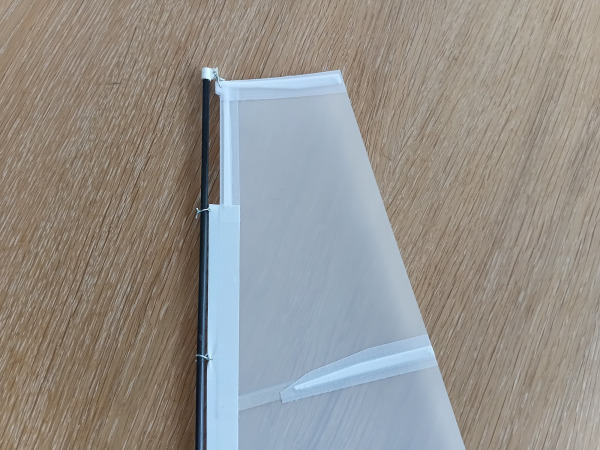
Tape the 3D printed corners in place using spinnaker tape. The tape should go well past the sail edges. Next you will trim these edges off with a craftknife.
Install the sail battens using tape strips. Find placement measurements on the sail plans.
The same batten STL fileset and sail corners and head are used on all sail sizes.
10.4. Leading Edge Tape
-
Spinnaker Repair Tape
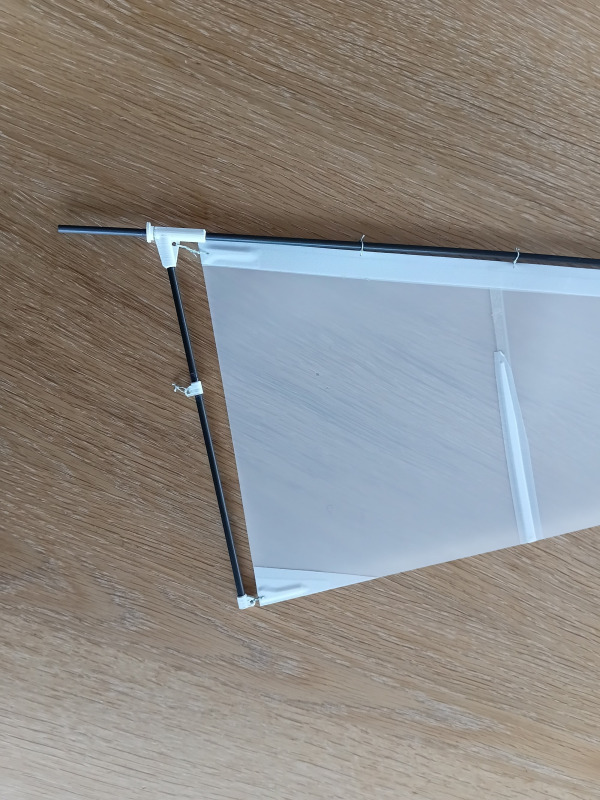
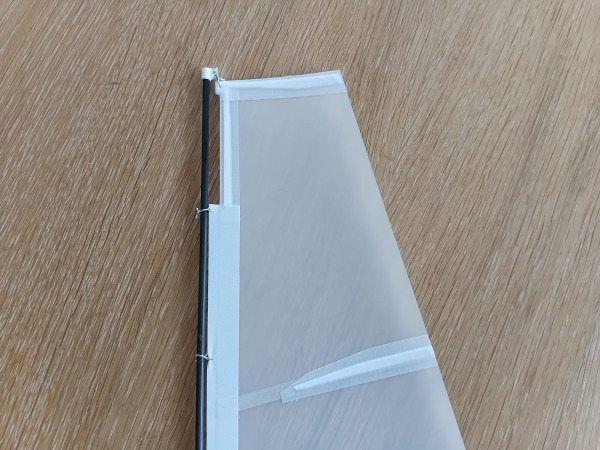
Apply sail tape to both sides of the leading edge stretching the sail while taping.
For this step it really helps if someone helps you to stretch the sail as you apply the tape. This will reduce any unwanted wrinkles.
Trim the tape to leave a 5mm double thickness leading edge and flush edges.
At the top of the sail cut a notch in the tape down to the second square batten. That part gets in the way of the mast and disturbs the sail shape.
10.5. Lacing Sail to Mast
-
(CA Glue) Superglue 20g
-
Braid Line
Starting at the top of the sail stitch the sail with a needle loaded with braid line. Instead of threading each loop and attachment point one at a time, it’s much easier to do this with one continuous length of braid meaning you only need to thread the needle with braid once.
Start at the top through the eyelet then every 90mm pop the needle through the leading edge sail tape. Work your way down the sail. Once down to the sail tack move across to the clew. As you do this you will need to keep threading more braid through the existing holes you have made.
Now that you’ve got thread running through all holes you can remove the needle from the thread and starting at the top cut the braid into 200mm lengths.
Now tie each loop with a simple reef knot attaching a small loop to the sail with 2 x 100mm tails.
Again starting at the top of the sail, tie the top line to the mast topper making it snug and as close to hole as you can. Then working down the mast tie each loop around the mast and loosely tie each attachment point. You don’t want them to be tight against the mast. You want them slightly loose so they can freely move around the mast and the sail will naturally form the correct shape governed by the sail battens.
When you get down to the tack you want to tie this so the front luff of the sail holds some tension.
For the clew it will attach to the boom end point. The sail should be slightly longer than the boom giving the sail some naturally baggy-ness that creates the aerofoil shape you want.
After this step superglue all the knots on the back of the mast with a small dot of superglue. This will make the knots permanent and is a great trick to reduce breakages whilst sailing. Once the glue has set trim all knot ends close to the knot with a sharp craft knife.
When this step is complete you should notice both the mast and boom have slight bends in them. The bend is great as it keep the sail tight and in the correct shape.
10.6. Mainsheet Loop
-
(CA Glue) Superglue 20g
-
Braid Line
Add a mainsheet loop to boom attachment. This is used to thread the mainsheet through. The end of the mainsheet then clips to the front of the sail and keeps the lines free from tangles.
The loop needs enough room so you can easily pop a clip through just before sailing. It does not need to be tight or keep the mainsheet too close to the boom.
Tie your knot then seal with a drop of superglue. It's quite critical that this knot does not come undone!
11. Main Sheet & Radio Setup
11.1. Boom Angle & Trim
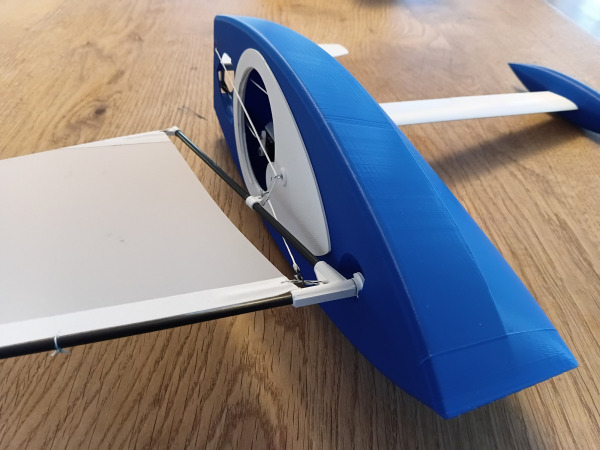
The boom should point toward each back corner of the boat when sheeted in.
When sailing upwind the mistake many people make is having the boom centred. While this is how you would set a 2 sail boat, on a single sail boat you need a different setup.
Downwind the boom travel should reach just beyond 90 degrees. This is great for learning to sail by the lee. Watch that youtube video to learn more.
11.2. Radio Fine Tuning
Fine tune the sail trim via the transmitter trim buttons. You should only need a little bit of trim ideally.
Another excellent improvement to the handling of your boat is to add exponential to the rudder for fine control and reduced drag. Adding expo means the rudder makes more subtle movements. The RS Footy is very well balanced by design and does not need large rudder corrections when sailing in straight lines.
Remember every time the rudder is corrected it acts as a break and slows you down. Minimising rudder movement is key to sailing faster!
12. Ready to Sail
The boat is now ready to sail.
Before sailing, test the hull in a bath or tub to check for leaks. On the first sail, run the boat for about 30 seconds, return to shore, and inspect inside. You may need to add a little superglue to any joins or gaps you missed.
When sailing, take a sponge, spare braid, and superglue. Be gentle on your first outing!
When built correctly, the boat remains very dry inside. The internal layout also lifts the electrics above any water, keeping the battery and receiver protected in their own compartment.
Printing Guide
The Racing Sparrow 3D boats are designed to be printed from PLA+. One roll of filament will easily be enough to print the hull parts, keel, bulb, rudder, and rig parts. The 3d model has been designed so that no part is too large making this easily printable on most home 3d printers. Minimum Printer Bed Size Required: 200×200×200mm (XYZ).
Simply load the STL files into the slicer software and start printing. All parts are pre-oriented correctly so you should not need to rotate.
For 3D printing advice and tips read our in-depth blog post.
The settings the author used on a Creality K1 Max Printer were:
PLA+ eSun
Nozzle 0.4,
Wall count of 2: top 4, bottom 4 layers
Use mouse ear for problematic lifting edges (google search this topic)
210°C Nozzle
60°C Bed
34°C Enclosure
All parts need to be printed at infill 100%.
Carbon Fibre
Before gluing any carbon it’s best to sand off the glossy outer coating of the spar. These coatings are just thin layers added to the carbon by manufacturers. When gluing this will add much better bond of carbon and PLA+. It’s easiest to sand these with a dremel or it can be done by hand with sand paper. Wear gloves to avoid itchy hands from the cut carbon particles. Carbon glues well with both CA and epoxy glues.