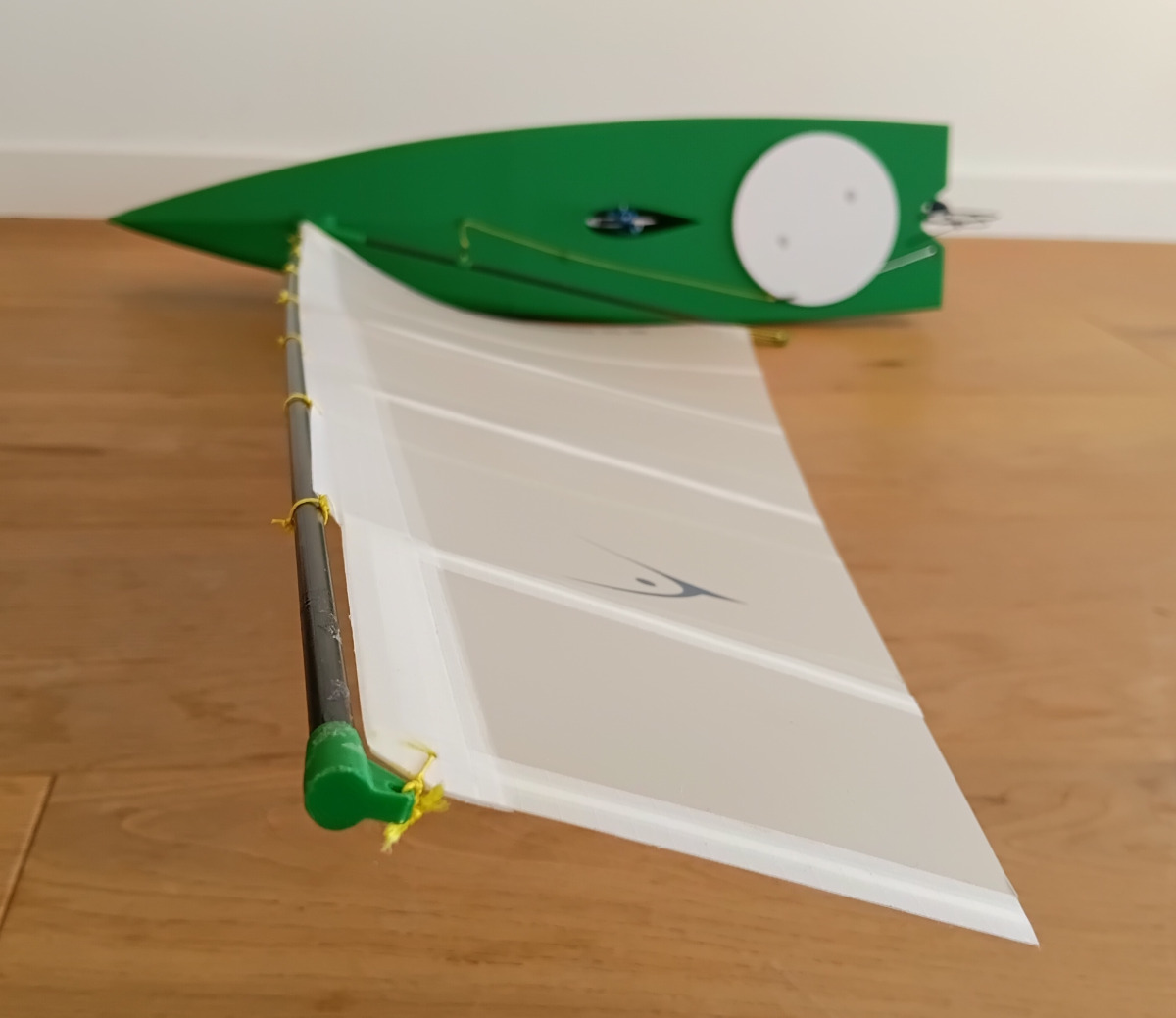
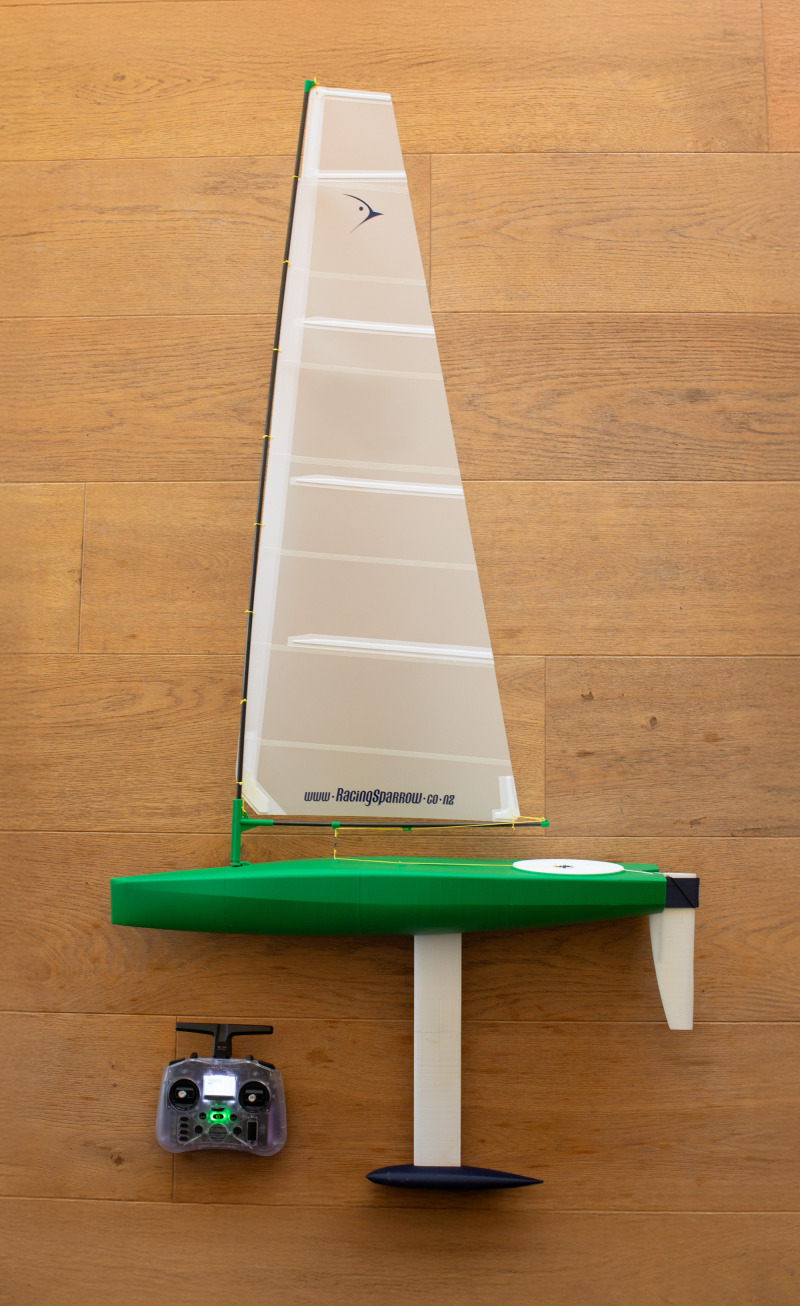
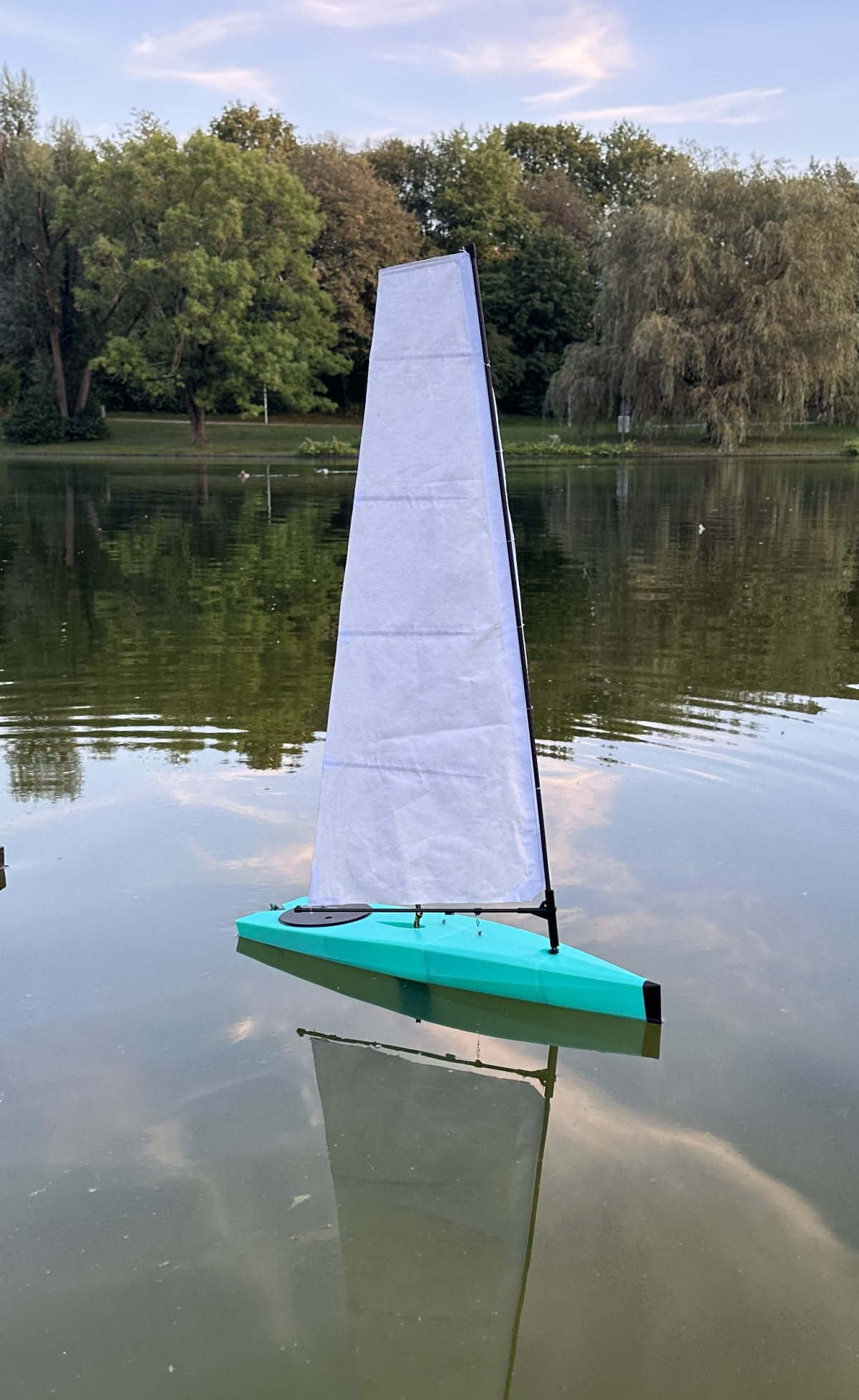
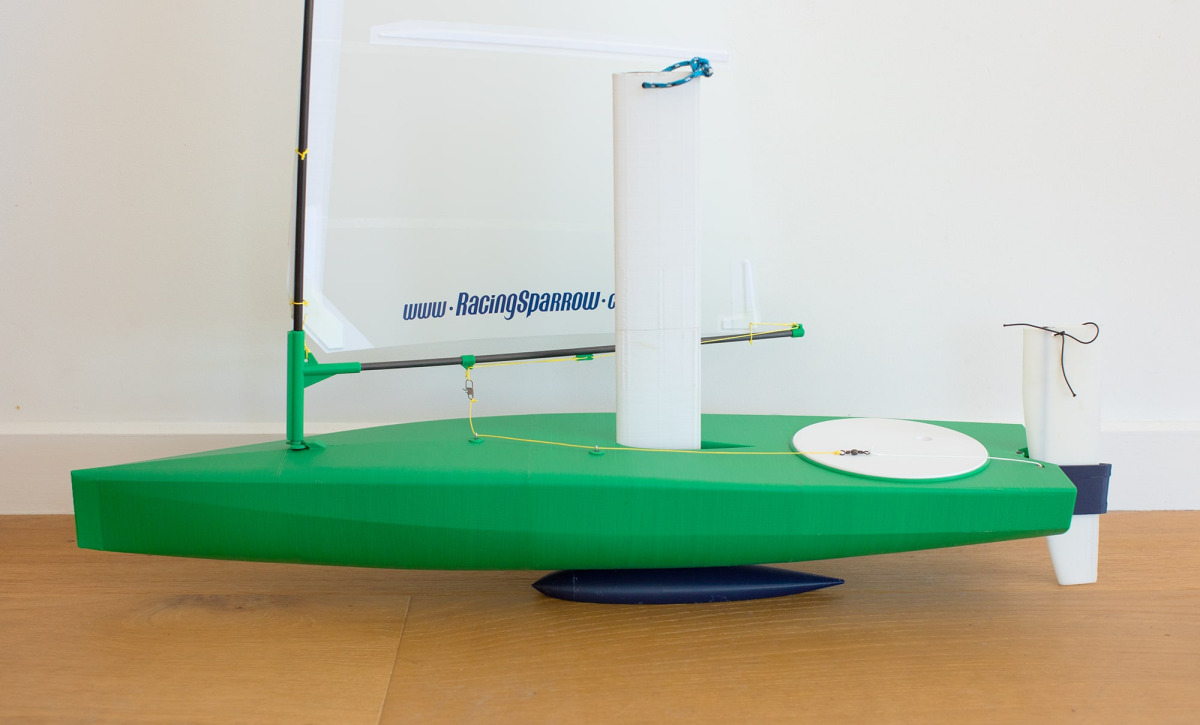
 The RS Ranger shown here with A-rig & 610g Bulb.
3D Printed RS Ranger
Purpose-built for reliable performance in educational settings. Comes with a detailed online build guide and full instructional video to support learning.
Key design features:
- 695mm length, 157mm width, 1000mm mast
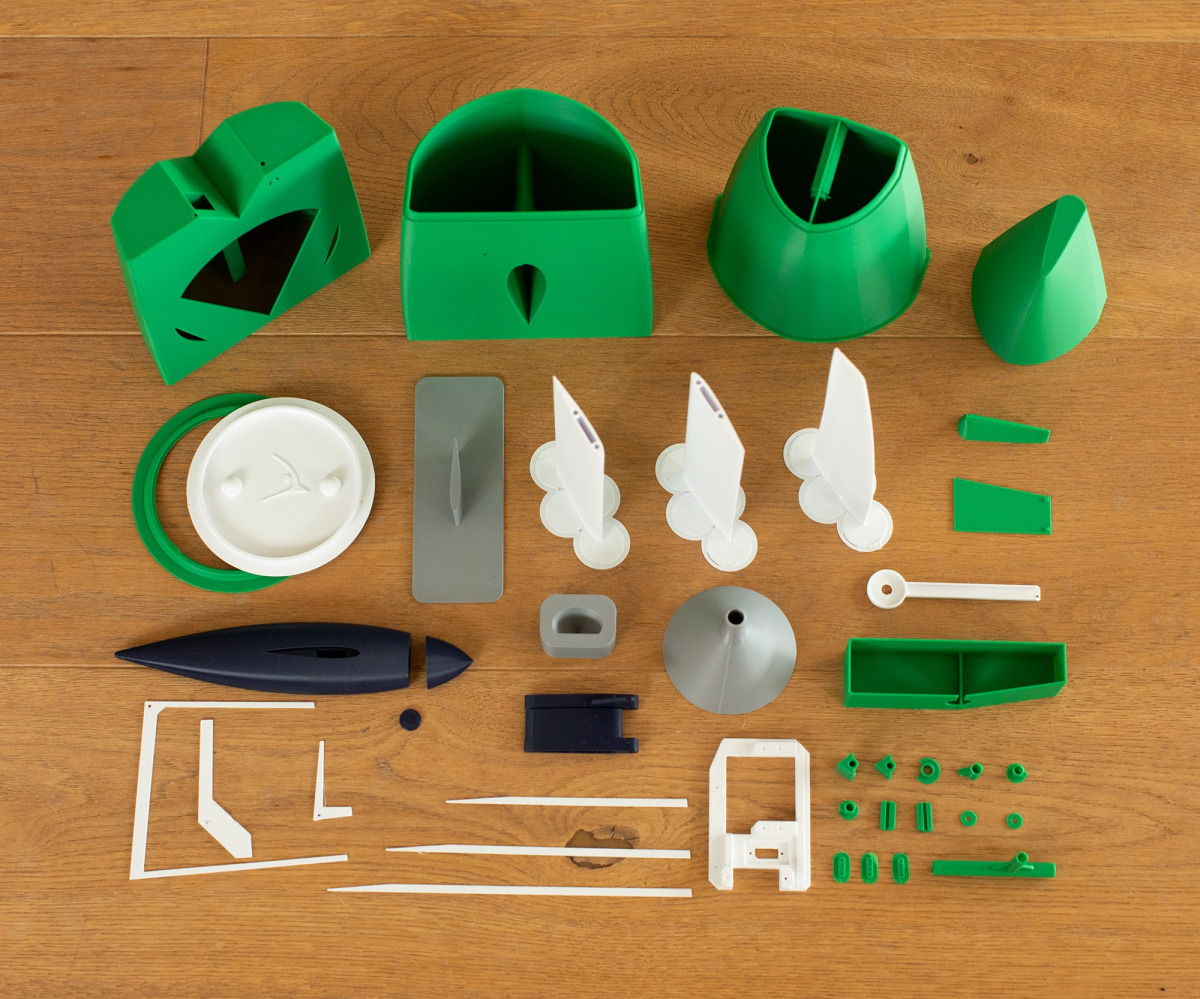
- Hull printed in 4 parts, printed rig fittings
- Bulb choice of 530g or 610g
- Rig Plans for A,B,C rigs
- Retractable Keel & Rudder
- Print Volume: 200 x 200 x 200mm (xyz)
- STLs: $25 USD Instant digital download
- Educational licences are available for classroom use.
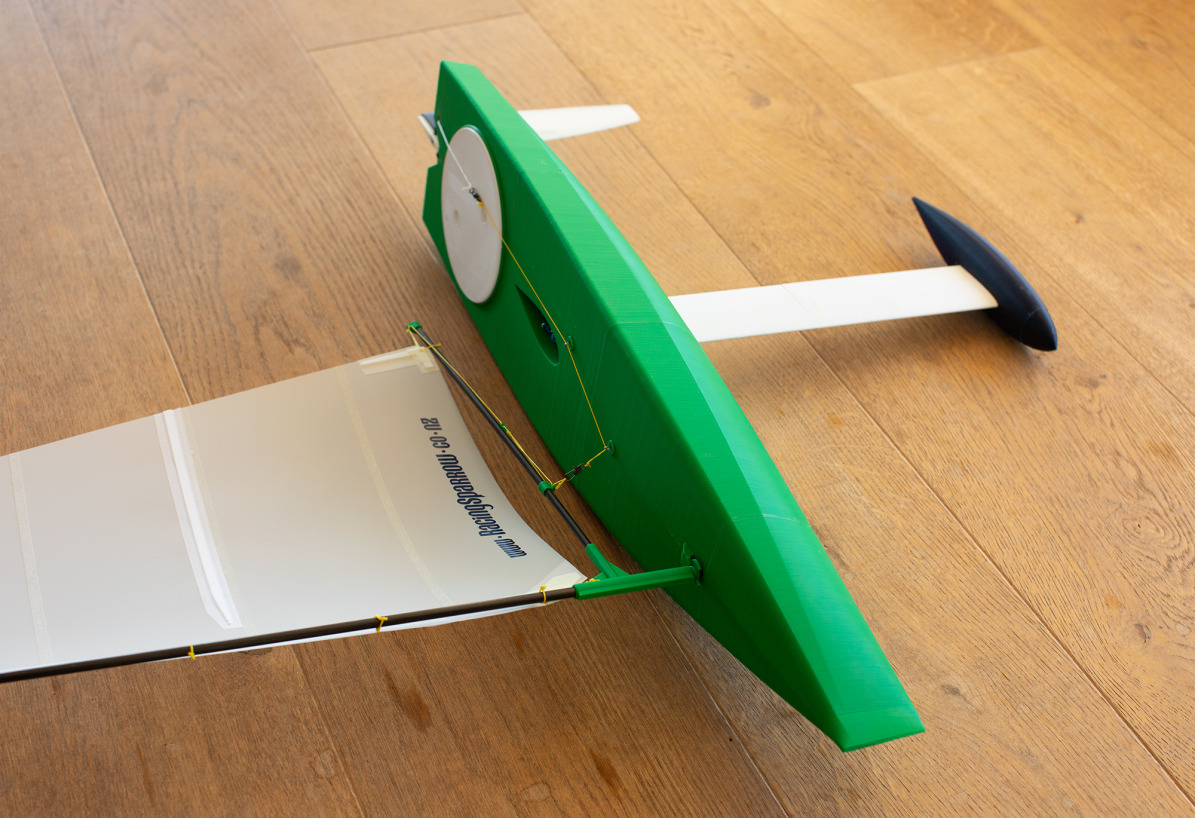
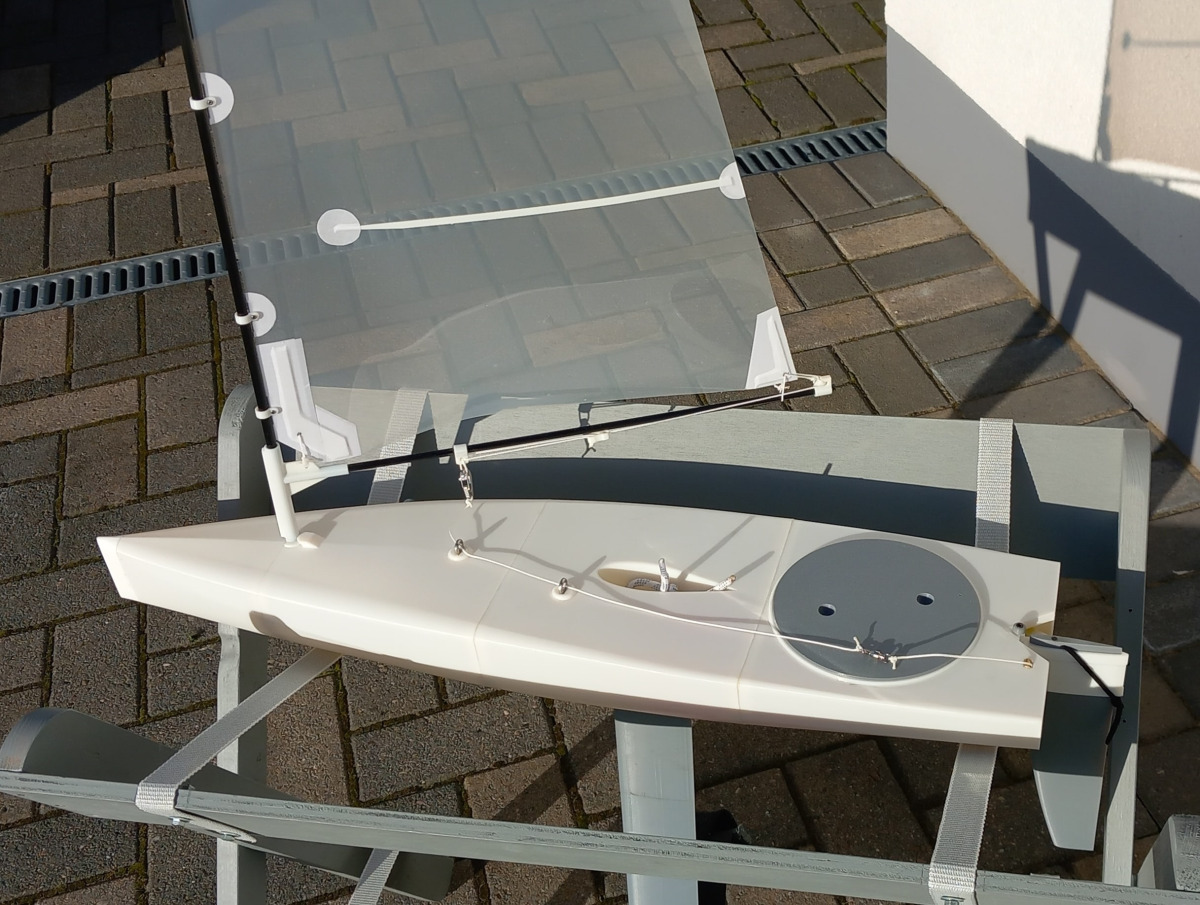

Raised Keel & Rudder
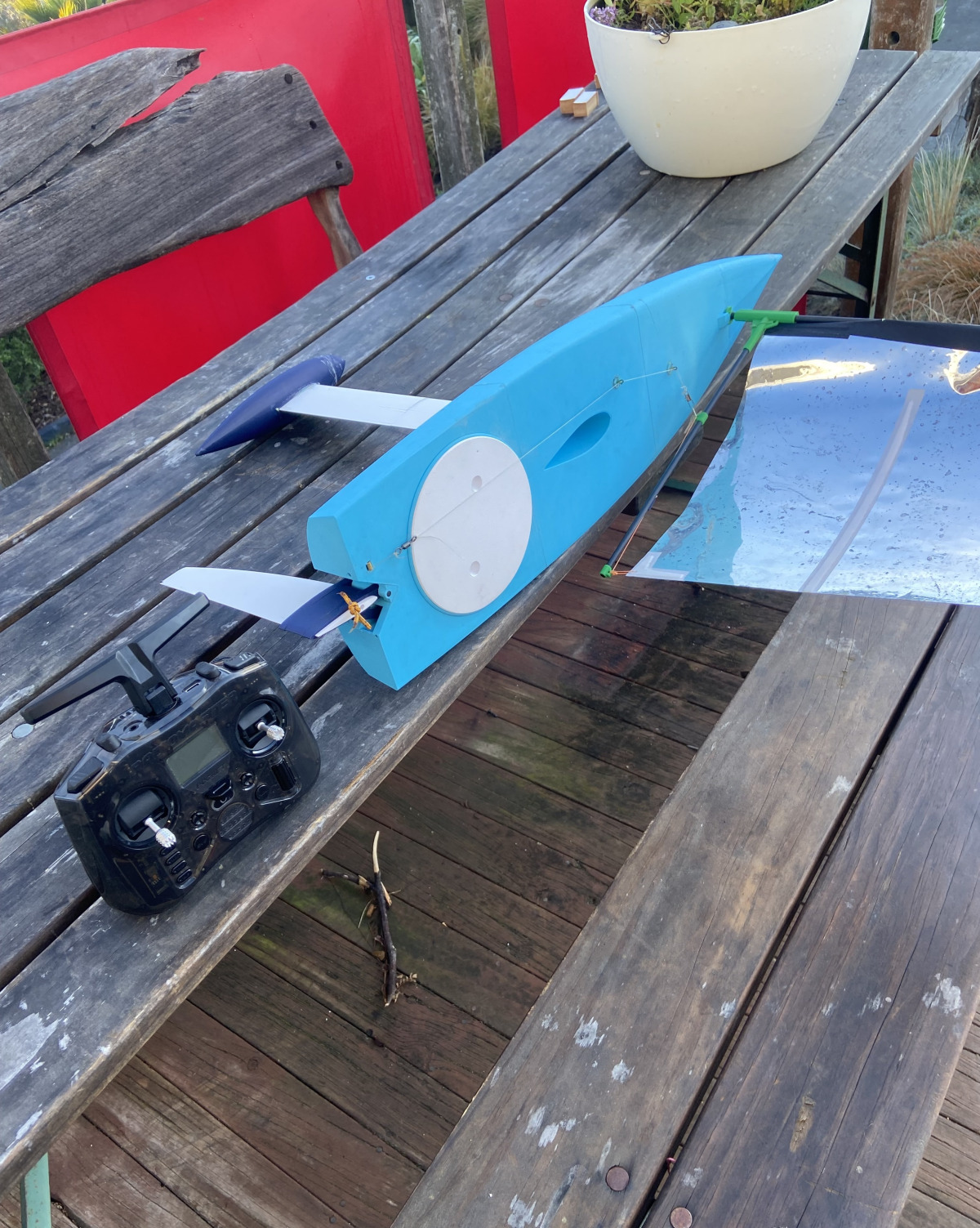
The keel and rudder can be raised up, making the boat easier to handle, transport, and store.
The keel can also be fully removed and swapped for different bulb weights, allowing the setup to be tuned for different conditions or uses.
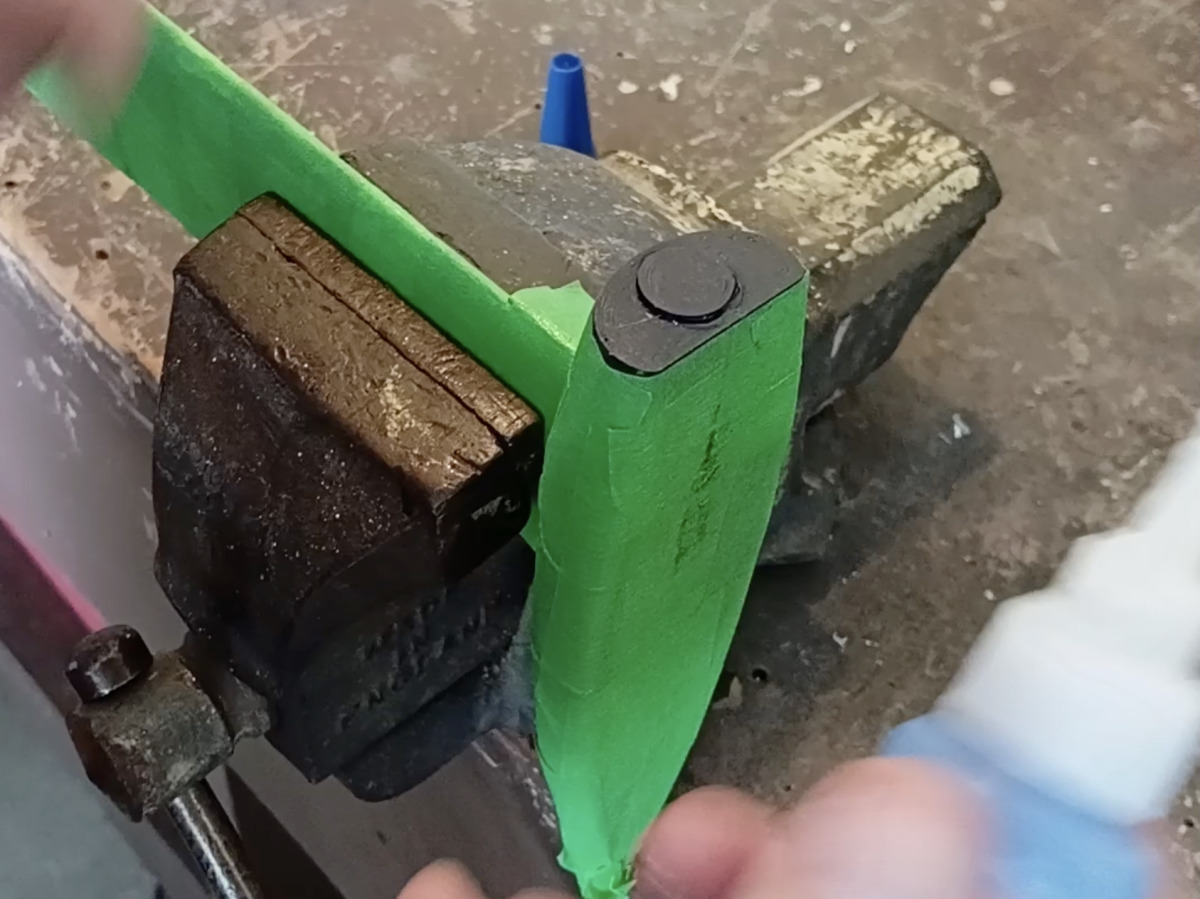
The keel is built using common, easy-to-source materials. Lead shot is used inside the bulb for ballast, bonded with standard adhesives and reinforced with carbon rods for strength and stiffness. This keeps costs down while allowing the keel to be repaired, adjusted, or rebuilt if needed.
Take STEM Learning Further
3D PRINT. BUILD. EXPERIMENT. SAIL.The Racing Sparrow Ranger 695 takes classroom projects to the next level. Students can explore 3D printing, engineering, buoyancy and aerodynamics while building a fully functional radio controlled sailboat.
With detailed online build instructions and educational licensing available, the Ranger makes an excellent hands-on project for schools, STEM programmes and makerspaces.
Complete Build Guide, Video & Materials List
Designed to print cleanly on common home 3D printers, the boat uses approximately one roll of filament for the complete set of parts. Every core structural component, including the keel case, keel bulb, rig fittings, and alignment tools are fully printable.
What’s new is the step-by-step online build guide and full build video.
The guide walks you through each stage of the build in clear, practical steps. From printing and preparation through to assembly, rig setup, and final tuning. The companion build video lets you follow along in real time, making the process approachable even if this is your first RC sailboat.
Electrics
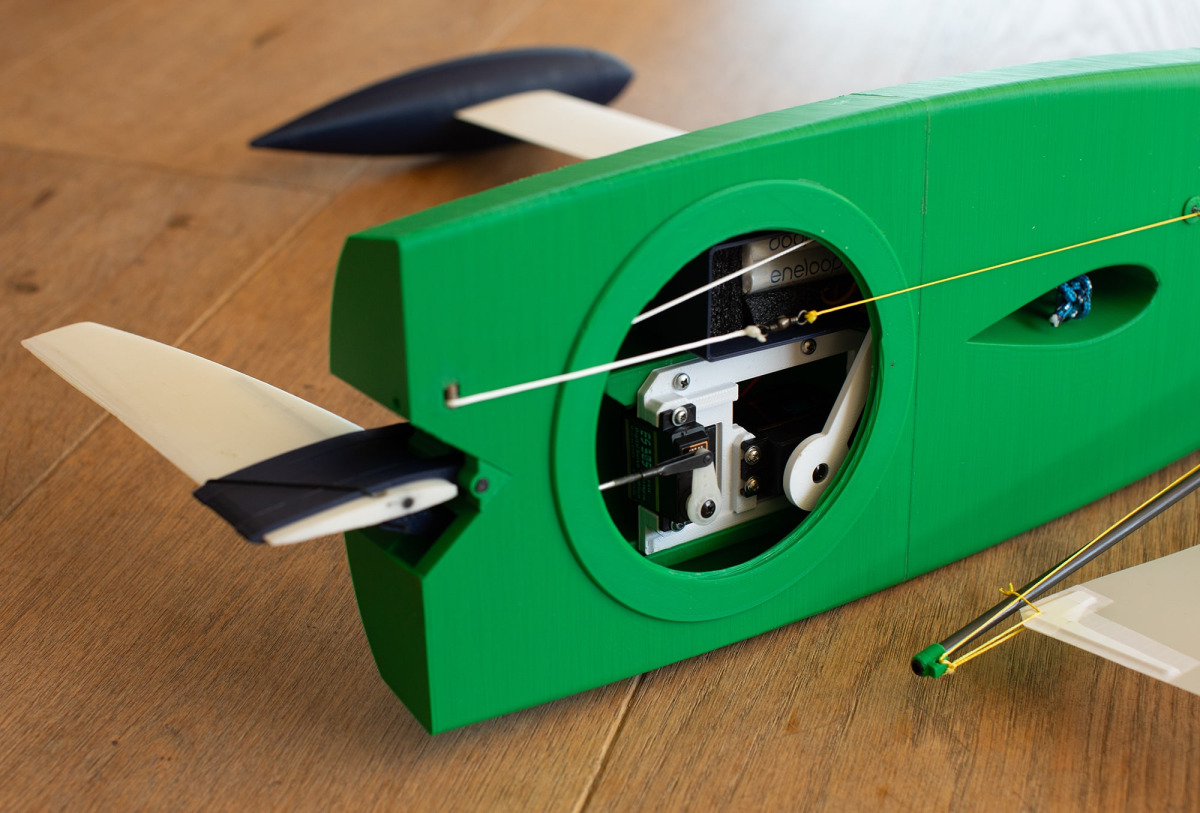
The boat is designed around standard, low-cost servos, keeping the electronics affordable and easy to replace.
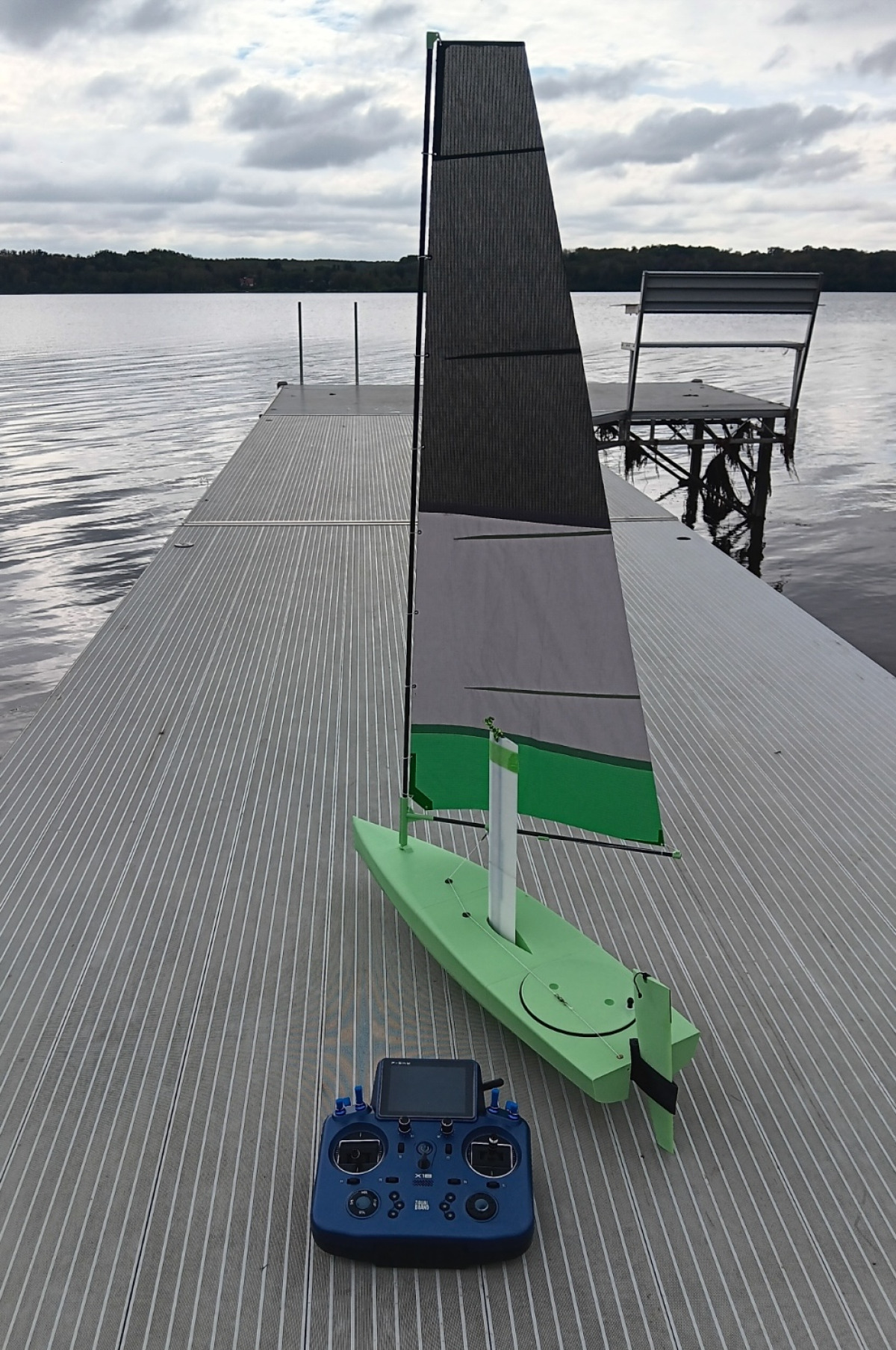
We recommend the RadioMaster Pocket CC2500 with an R86 receiver, a compact and reliable setup that suits the boat well.
4×AAA batteries are ideal. They are light in weight, easy to source, and provide plenty of power for long sailing sessions. The servo tray can be easily removed for maintenance or transferred into another hull.
The battery and receiver sit in a separate internal casing, providing added protection.
A sealed hatch cover keeps water out, and testing has shown the boat performs very well at staying dry, even during extended sailing.
Rigging
The rig uses easy-to-source carbon tube in 6mm and 5mm diameters, with all rig components supplied as STL parts to keep the build simple and consistent.
A fishing clip and fishing braid connect the servo to the sail, creating a lightweight and reliable control system. It's incredibly easy to switch rigs during a sailing session. Just unclip, twist the rig 180 degrees and it pops out.
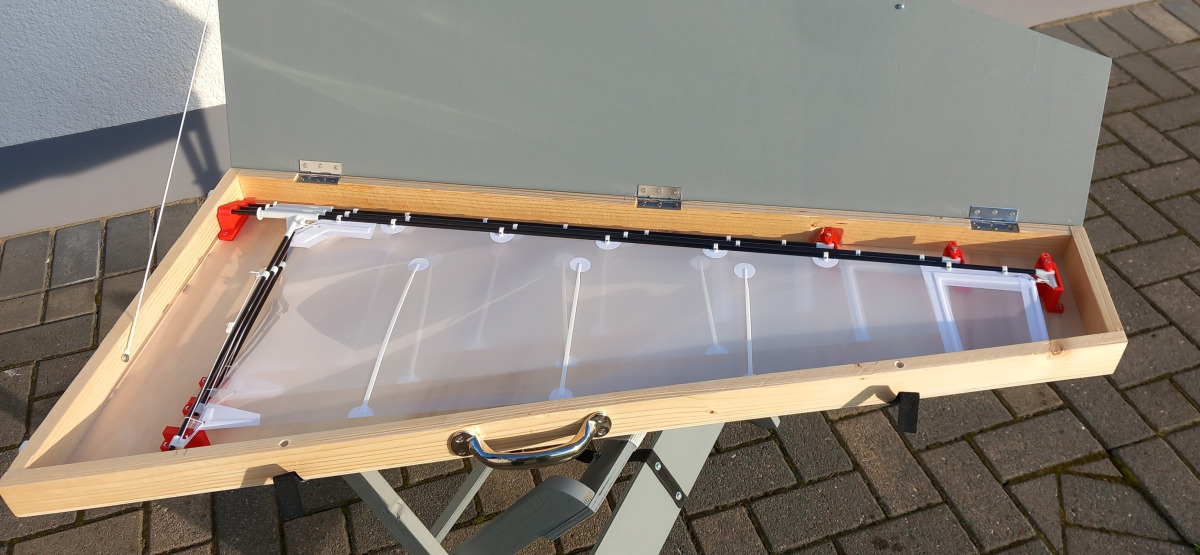
The sail plan includes rigs A, B, and C, each made from a single sheet of your chosen sail material. A tape-on printed batten system and square-top sail design produce a powerful and efficient sail plan.
This setup delivers strong drive and excellent upwind performance, allowing the boat to be sailed in wind conditions from 2 to 30 knots using different rig and sail combinations.