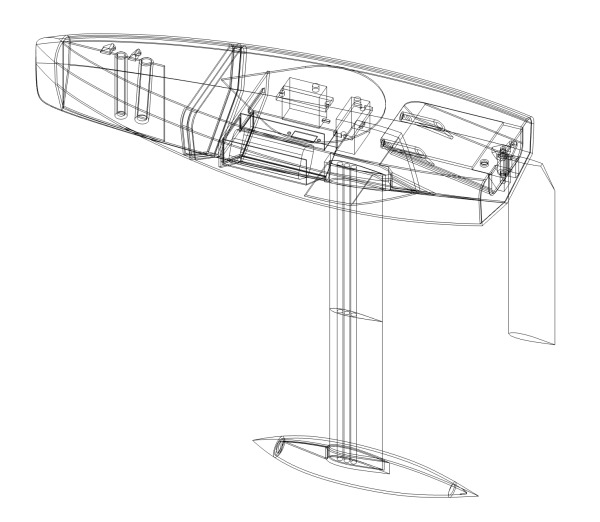
Racing Sparrow Footy Design V1
The V1 design had her maiden sail and I was really happy with how she sails. Tracks nicely and is really easy to build.
The design process is a really good challenge and I'm enjoying the process of balancing out all the delicate variables at such a small scale.
Update: April 21 2026
The boat is now available to print yourself!
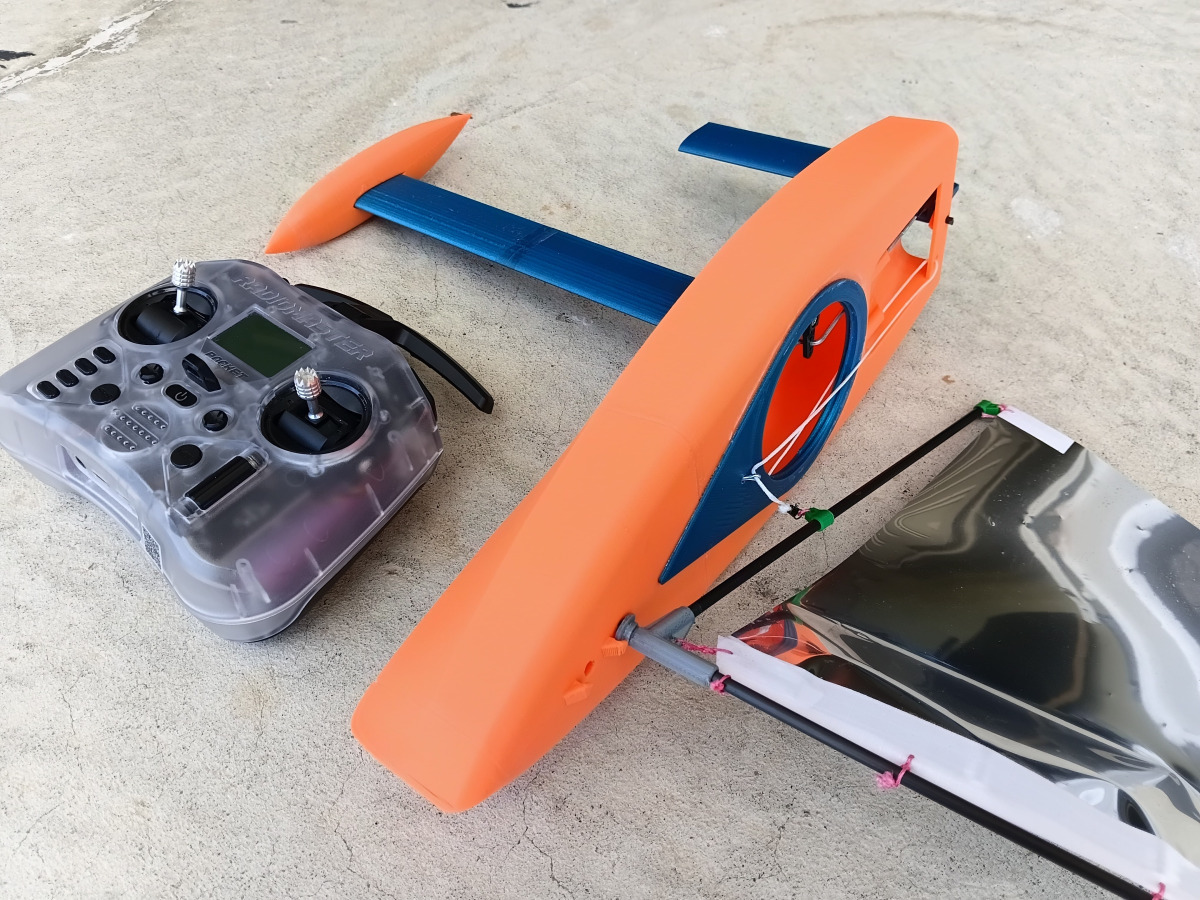
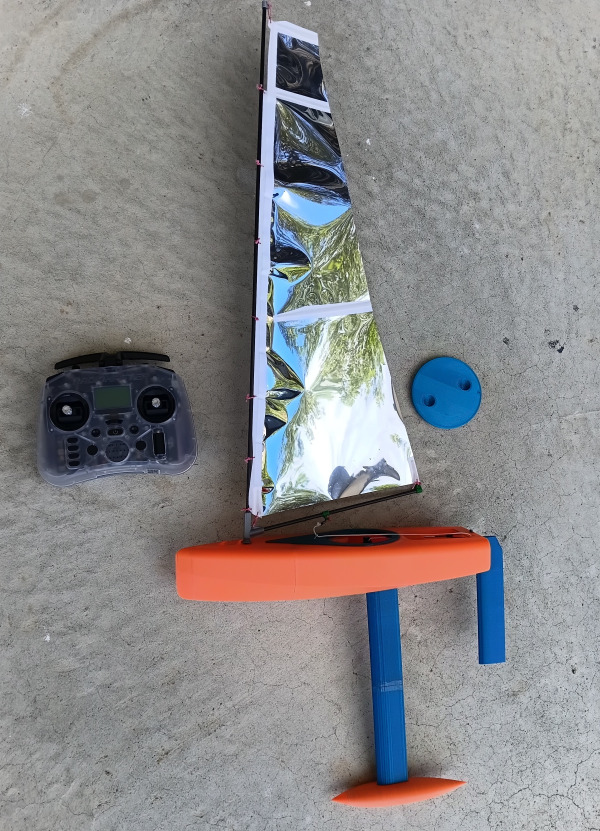
Designing a footy has always been on my mind. I decided to study the rules and the all important measuring box!
My design initially focussed on a double diagonal design to maximise hull length. But I soon realised the real advantage lies in extending the rudder past the box and into the allowed rudder slot in the measuring box. This is what will give the boat the much needed stability at this small scale.
With the footy being so small the real challenge comes with the available volume vs weight ratio. The electrics are really heavy for such a small boat and the smaller volume creates a real design challenge to overcome.
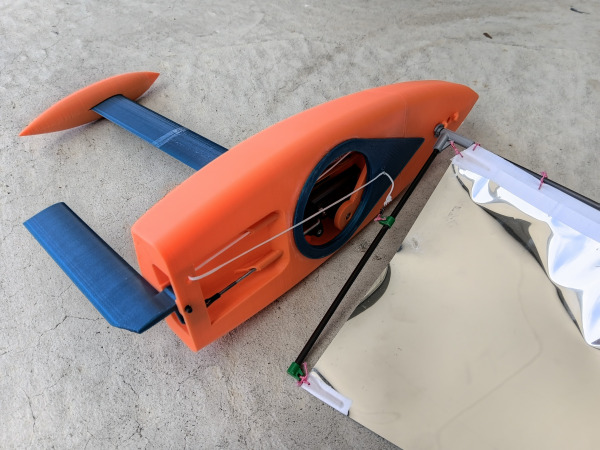
My test sail really showed me how much the boat needs volume to overcome the nose diving. The weight distribution is critical. I placed the battery just in front of the keel as low as possible in the hull.
I found the boat tracked pretty well for a first sail. Upwind was surprisingly good. For the next version I think I'll angle the mast slightly more upright but in the same position.
The next version will also have more overall volume with a deeper hull and likely different lines. The keel, rudder and sail combo seems to be a good balance.
The bulb is a 220g lead shot filled shell. The keel has 3mm x 3 rods inside the printed aerofoil keel. The keel is 220mm long and has a nice NACA shape.
The 3D printing process is a breeze. The complete set of parts prints in about 5-6 hours. The hull is printed in two main parts, with a short "nose" section added to the front. The hull join is built directly into the design so alignment is simple and clean.
The electrics are on a servo tray which is fixed in place with one screw making it easy to remove and maintain or pop into another boat.
The electrics are a 4xAAA battery pack and two small MG90 servos. I will likely put better servos in the next build but the MG90s did the trick for a cheap build.
Keep an eye on this website for updates on this model.
Happy sailing folks and thanks for your support, Bryn.