The Story Behind Racing Sparrow Radio Controlled Yachts
I recently had the pleasure of joining Fresh FM's Community Conversations with host Renée Cocker to talk about Racing Sparrow, model yacht design, 3D printing, and how a lifelong passion for sailing eventually grew into a business connecting builders from around the world.
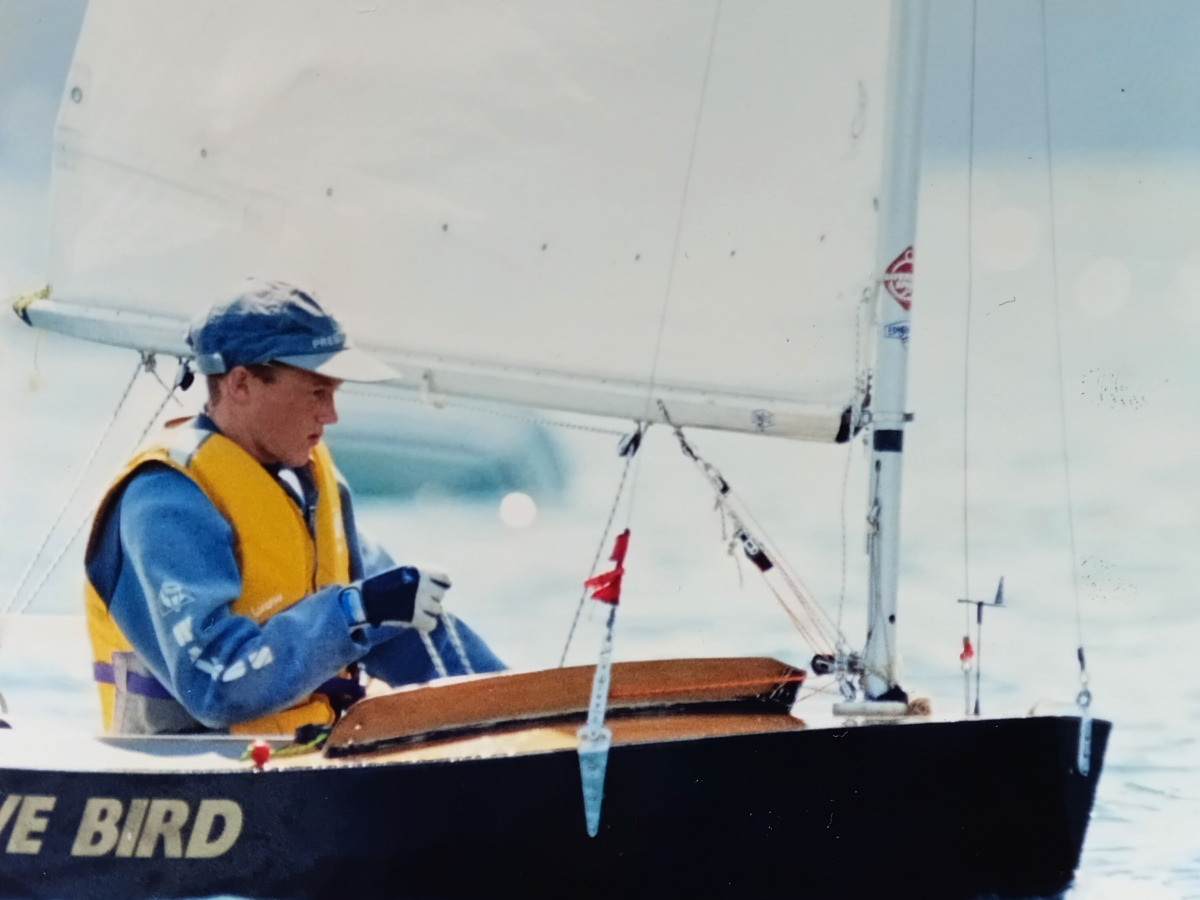
The photo is of Bryn when he was 14. In his P-class Elusive bird. P770.
From Childhood Sailing to 3D Printed RC Yachts
If you'd prefer to listen, you can hear the full interview below. [14Mins]
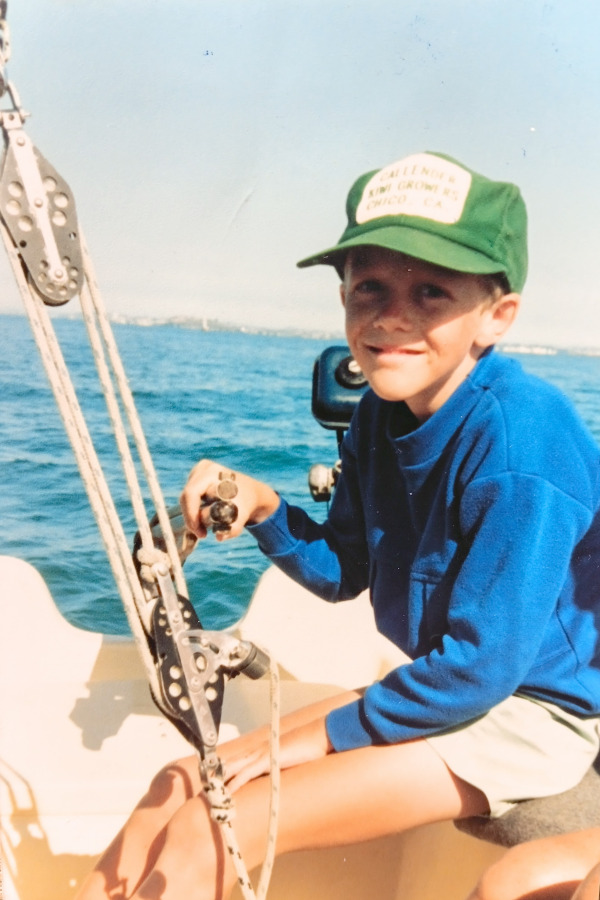 Bryn as a kid sailing around Waiheke island with his Dad Ross Heveldt. That boat was a 17ft trailor sailor called "Brightwing". Note Bryn already in his blue and green branded colours!
A nickname that became a brand
People often ask where the name Racing Sparrow came from.
The story goes back to my childhood. My uncle Bruce gave me the nickname because I was always full of energy, constantly running around. Before long, my first Optimist dinghy became Racing Sparrow, and somehow the bird theme continued through nearly every boat I've owned since.
When it came time to name the business, there was never really another option.
Combining design, computers and sailing
Looking back, one of the best pieces of advice I ever received came from my dad Ross Heveldt. He simply asked, "What do you enjoy? What are you good at?"
His advice was to build a career around those interests instead of chasing something that didn't excite me. That led me into design and web development, combining creativity with computers, while sailing remained a constant throughout my life. Years later, those separate interests naturally came together to create Racing Sparrow.
From building boats to designing them
More than twenty years ago I wrote Build Your Own Radio Controlled Yacht because there was very little information available for people wanting to build their first model yacht.
At the time, 3D printing simply wasn't an option. Developing a new design meant months of building prototypes by hand before discovering whether an idea actually worked. Today, everything has changed.
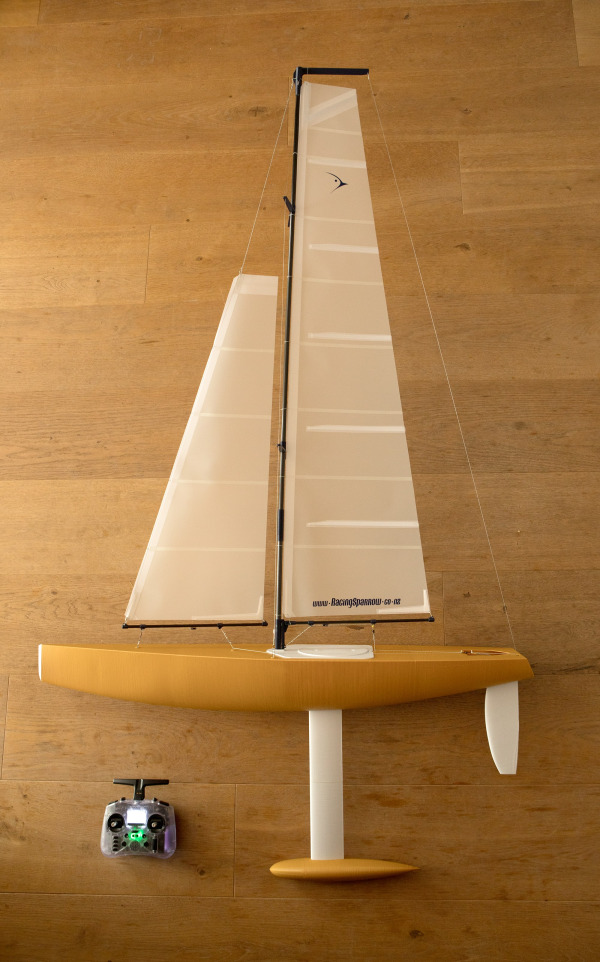
Using modern CAD software and affordable 3D printers, I can design a hull, print it overnight, assemble it, test it on the water and improve it within days instead of months. That rapid design cycle has completely transformed the way I work. As a designer, it's incredibly satisfying to watch something you've created on the computer become a real object, layer by layer, on the printer.
Making the hobby more accessible
Competitive radio-controlled yacht racing can become surprisingly expensive. High-end racing yachts can cost thousands of dollars before electronics or accessories are even considered. I've always wanted to approach the hobby differently. My goal has never been to produce the most expensive or exclusive boats. Instead, I want to design yachts that perform well while remaining affordable for beginners, families and anyone curious about getting started.
Modern 3D printing makes that possible. By combining printed parts with simple materials like carbon fibre tubes and commonly available hardware, many expensive custom components can be replaced with clever design solutions. Good design often solves problems more effectively than expensive parts.
A worldwide community
One of the most rewarding parts of Racing Sparrow has been watching the community grow. Every day I receive emails from people around the world who are building one of my designs. Some are experienced sailors. Others have never built a model boat before.
Many join local clubs after completing their first project, while others simply enjoy the challenge of creating something with their own hands. What I enjoy most is that almost nobody builds the boats exactly as I designed them. Someone experiments with a different sail plan. Another builder redesigns a fitting or modifies the keel.
Every builder adds their own ideas, and that's exactly what I hoped would happen. Watching those designs evolve through the community has become one of the most enjoyable parts of the business.
Why 3D printing fits so well
People sometimes ask whether 3D printing replaces traditional craftsmanship. I don't think it does.
It simply changes where the creativity happens. Instead of spending hundreds of hours making identical parts by hand, I spend that time solving design problems. If I can simplify a component, reduce the number of parts, make assembly easier or lower the overall cost without sacrificing performance, that's where the real satisfaction comes from.
The printer simply becomes another workshop tool.
Looking ahead
The interview happened on a particularly memorable day. That morning, Racing Sparrow received its first university licence order, allowing students to use one of my designs in an educational setting. Seeing educational institutions recognise the value of these projects was incredibly encouraging.
It suggests these boats are more than just enjoyable weekend builds. They're also valuable teaching tools for CAD, engineering, manufacturing and creative problem solving. For someone who has spent years refining these designs, it was a milestone I'm genuinely proud of.
Thanks for listening
I'd like to thank Renée Cocker and everyone at Fresh FM for inviting me into the studio. It was a great opportunity to talk about a hobby that has shaped much of my life and the business that has grown from it. If you'd like to hear the full conversation, you can listen to the interview above.
If you'd like to build your own radio-controlled yacht, explore the plans, or simply learn more about the hobby, you'll find everything here on the Racing Sparrow website.
And if this interview inspires you to build your first boat, I'd love to hear from you. Cheers, Bryn.